

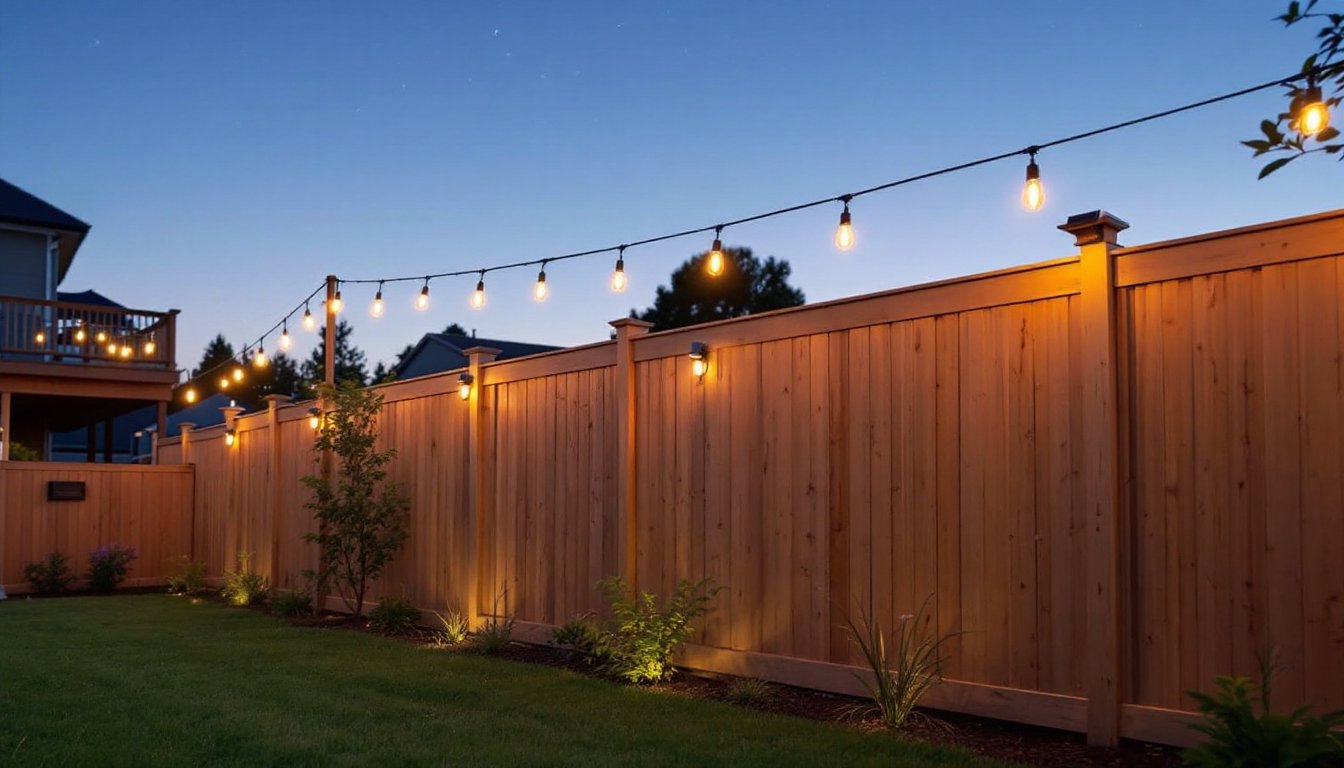

A well-lit fence transforms your backyard from a dark, forgotten edge into an extended living space. Whether you’re hosting an evening gathering, adding security to your property, or simply extending the usable hours of your yard, backyard fence lighting delivers both function and aesthetic appeal. The good news? You don’t need an electrician or a hefty budget to light up your fence. Modern options range from simple solar-powered stakes to smart systems that sync with your phone. This guide walks you through seven proven approaches that DIY-friendly homeowners can install in an afternoon.
Key Takeaways
- Solar-powered fence lights offer the easiest DIY installation without wiring or permits, though output dims in fall and winter months in northern climates.
- LED string lights and bistro configurations create warm ambiance while consuming minimal energy, but require proper securing and seasonal hardware inspections to prevent sagging and water damage.
- Backyard fence lighting effectiveness improves when combining multiple fixture types—such as solar stakes, string lights, and sconces—to create overlapping illumination and visual depth.
- Hardwired wall-mounted sconces deliver 400–800 lumens and consistent year-round brightness, making them ideal for security and task lighting despite requiring proper electrical setup and 18-inch-deep cable burial.
- Motion-sensor and smart lighting options enhance security and convenience, but require careful sensitivity adjustment to avoid false activations from wildlife or debris.
- Proper spacing (3–4 feet for solar stakes, 8–12 feet for sconces, 18–24 inches for string lights) and warm color temperatures (2700K) prevent dark patches while creating an inviting atmosphere.
Solar-Powered Fence Lights: The Easy, Eco-Friendly Solution
Why Solar Lights Are Ideal for Fence Installations
Solar fence lights are the gateway project for backyard lighting, no wiring, no trenching, no permits. They charge during the day and glow automatically at dusk, making them maintenance-free once installed. Most models come with a simple mounting bracket that screws or clips directly to your fence rail or post.
The key advantage is versatility. You can test placement and spacing before committing to anything permanent. If a light underperforms, move it. If you want to add more next season, there’s zero infrastructure to work around.
When shopping, look for models with at least 1000–1500 mAh battery capacity. Cheaper units (under $15) often fade by 10 p.m. on a summer night. Mid-range solar lights ($25–$50 per unit) typically run 6–8 hours on a full charge. Check the IP65 or higher waterproof rating, fence lights endure rain, dust, and temperature swings.
Mounting takes seconds. Mark your fence posts at a consistent height, 4 to 6 feet is typical for visibility without glare in eyes. Use a level and predrill holes if your fence is composite or hardwood to avoid splitting. Stainless steel or coated fasteners resist rust better than plain steel.
One trade-off: solar output dims as days shorten in fall and winter. In northern climates, many homeowners rely on solar lights mainly from May through September, then switch to line-powered options for year-round ambiance.
LED String Lights and Bistro Configurations
String lights strung horizontally above or across a fence create a warm, inviting atmosphere that reads as intentional design rather than functional lighting. Bistro-style configurations, taut cables running between posts with bulbs spaced 12 to 24 inches apart, are popular and scalable.
LED string lights consume a fraction of the energy that incandescent alternatives demand. Warm white (2700K color temperature) mimics traditional Edison bulbs and flatters outdoor decor. Cool white (4000K–5000K) works better if you need task lighting for reading or detail work.
For permanent installation, run power from an outdoor GFCI outlet. If your fence is far from existing outlets, bury a UV-rated electrical cable in a trench 18 inches deep (check local code, requirements vary). Alternatively, a heavy-duty extension cord rated for outdoor use works for temporary or seasonal setups, though it’s not ideal as a long-term solution.
Secure string lines at each end with eye bolts or lag screws, ensuring tension is even and taut. Sag invites water pooling on bulbs and cable fatigue. For a fence 20 to 30 feet long, expect $40–$150 for quality LED strings, plus hardware.
One practical note: if your fence is wind-exposed, strings may vibrate and rattle bulbs loose over time. Inspect mounting hardware seasonally and add cable clips at midpoints if needed. Most LED bulbs are replaceable and cheap, buy spares.
In-Ground and Post-Cap Lighting for Structure and Safety
In-ground uplights mounted at the fence base create drama by silhouetting fence lines against the night sky. Solar in-ground units stake into soil: line-powered versions require trenching and buried wiring.
For DIY installation, solar in-ground lights are straightforward. Drive them into the ground 6 to 12 inches from the fence base, spacing them 3 to 4 feet apart. They’re typically weak (under 50 lumens), so use them as accent lighting, not primary illumination. Test placement in daylight before finalizing, glare into windows or neighbors’ properties is a genuine concern.
Post-cap lights, fixtures that crown fence posts, combine structure and safety. They define your lot line visually and light the top edge of the fence. Many are solar: some plug into outlets. Installation is simple: measure your post diameter (typically 4×4 nominal, which is actually 3.5 inches), buy a cap that fits, and secure it with the included hardware.
Hardwired post-cap lights deliver brighter output (100–200 lumens per fixture) and run reliably year-round. They do require running power, either via surface-mounted conduit or buried cable. If your fence is tied to an outdoor circuit, this is manageable. If not, hiring an electrician to add a dedicated 20-amp GFCI outlet near the fence ($200–$400) is a solid investment for a long-term installation.
Step height is critical for safety. If your fence borders a deck or stair, post-cap lights at 4–5 feet illuminate the transition zone and prevent tripping hazards.
Wall-Mounted Sconces: Creating Ambiance and Definition
Wall-mounted sconces bolted directly to fence posts or fence panels deliver high-output lighting with clean aesthetics. They project light horizontally or upward, washing the fence face and surrounding area.
Solar sconces are common and easy to install, no wiring required. Hardwired sconces offer more lumens and consistent brightness, but demand proper electrical setup. Expect 400–800 lumens from quality wall sconces, compared to 30–100 from most solar stakes.
Mounting height matters. Sconces 5–7 feet high cast light downward and sideways, creating pools of visibility without harsh overhead glare. Space them 8 to 12 feet apart along a fence run. Odd spacing feels intentional: evenly spaced lights every 6 feet can look institutional.
For hardwired sconces, run power via buried cable (18 inches deep) or surface conduit to each fixture. Use 14/2 UV-rated cable rated for wet locations. Bury or protect the cable beneath mulch, gravel, or low plantings to avoid tripping and UV damage. Every sconce should be fed from a GFCI outlet upstream.
Versatile outdoor wall lights suit mounting on fences, decks, and walls alike, dimensions and finish options vary widely, so measure your fence post width and choose a sconce that clears any protruding hardware. Brass, copper, and powder-coated finishes resist corrosion better than bare metal.
Motion-Sensor and Smart Lighting Options
Motion sensors add security and convenience. They activate lights when movement is detected, saving energy and alerting you to activity around your fence perimeter.
Solar motion lights are budget-friendly ($20–$60 each) but typically dim. They work best as supplement lighting, detecting intruders or wildlife, rather than primary illumination. Hardwired motion fixtures, mounted like sconces, deliver 500+ lumens and can be set to stay on during evening hours, then switch to motion-only after midnight.
Smart lighting integrates with home automation systems. Wi-Fi or Zigbee-enabled fixtures let you control brightness and color temperature from your phone, set schedules, and sync with other smart home devices. The Spruce covers home decor and improvement systems extensively, offering perspectives on smart lighting ecosystems. Setup requires a smart hub and pairing via an app, straightforward for tech-comfortable homeowners, but less intuitive for others.
Cost scales with features. Basic motion lights run $30–$80. Smart-enabled sconces start around $100–$150 per unit. Hardwired smart systems require an electrician if you lack existing outdoor circuits, adding $300–$500 to your project.
One practical caveat: wildlife, wind-blown debris, and even car headlights can trigger motion sensors. Adjust sensitivity settings to avoid constant false activations that drain batteries or annoy neighbors. Pair motion sensors with a manual override (a simple switch or app) so you can lock lights on during gatherings without repeated triggers.
Design Tips: Color Temperature, Spacing, and Layering Light
Effective fence lighting balances function and beauty. Start with color temperature. Warm white (2700K) feels inviting and flatters skin tones, ideal for entertaining areas. Cool white (4000K–5000K) feels clinical but improves visibility for task work. Mix both if your fence surrounds varied zones: warm lights near seating, cooler tones near pathways or work areas.
Spacing prevents dark patches and harsh shadows. A common mistake is spacing lights too far apart, creating pools of light separated by darkness. Instead, let circles of illumination overlap slightly. For sconces, 8–12 feet apart works well. For string lights, 18–24 inches. Solar stakes need closer spacing (3–4 feet) because they’re weaker.
Layering light, combining multiple fixture types, adds depth. A base layer of solar stakes near ground level, mid-level string lights, and upper sconces create visual interest and functional redundancy. If one layer fails, others fill the void.
Home improvement guides on Hunker emphasize prep and planning, measure your fence length, sketch fixture placement, and test brightness in person (not just photos or specs). What looks bright in a product photo may feel dim in your actual yard, shaped by surrounding trees, existing house lights, and sky glow.
Finally, consider maintenance. Hardwired fixtures buried underground demand care if you later dig for irrigation or other projects. Mark cable runs with paint or flags. Solar lights need periodic cleaning of dust and pollen off panels. Most homeowners inspect and reset devices seasonally, fall and spring, especially, to catch loose connections and dim batteries before they fail.