

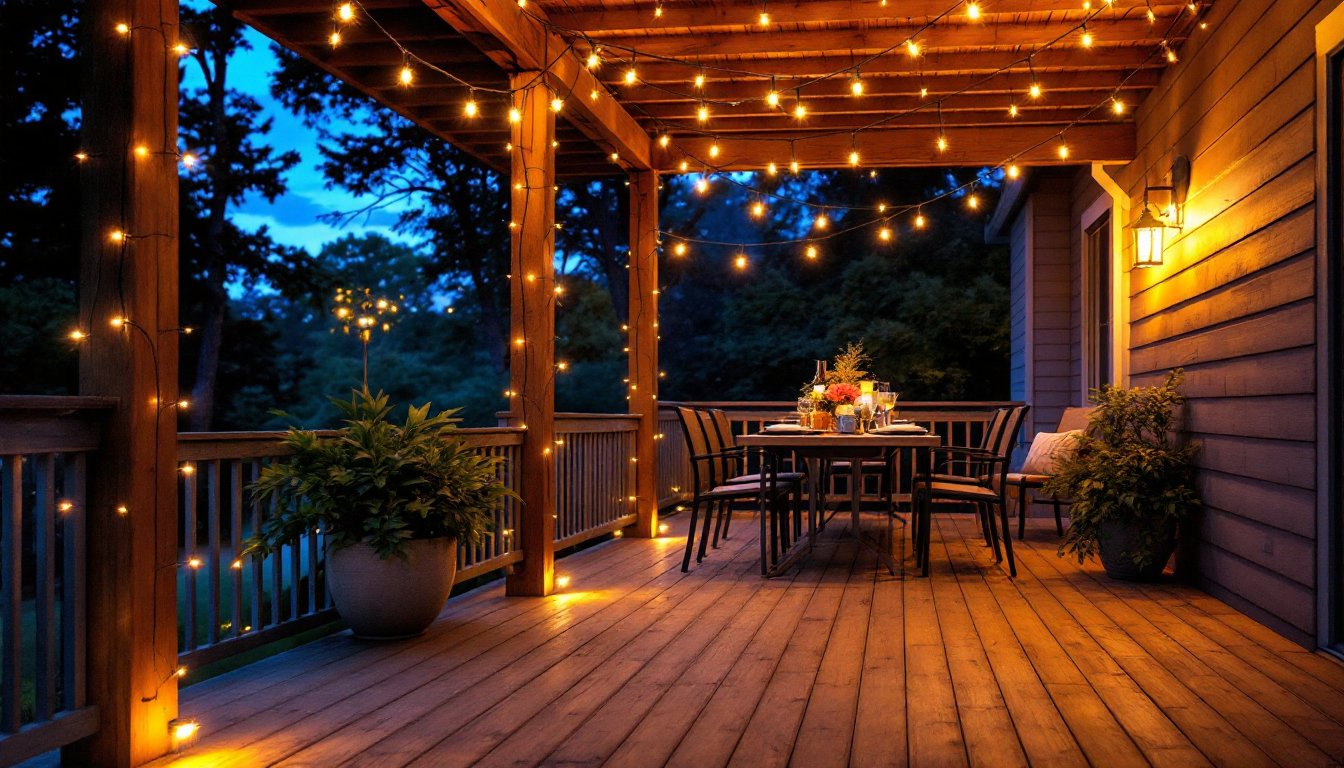

A well-lit deck extends your outdoor living season and transforms how you use your space after dark. Whether you’re hosting a summer dinner party, reading on a quiet evening, or simply enjoying the fresh air, deck lighting ideas set the mood while keeping your family safe on stairs and walkways. The right combination of ambient, task, and accent lighting doesn’t just brighten a deck, it defines the entire outdoor experience. From energy-efficient LEDs to smart systems you control from your phone, today’s deck lighting options offer flexibility and style that goes far beyond basic overhead fixtures. This guide walks you through the main lighting approaches, installation basics, and practical considerations for transforming your deck into a functional and inviting outdoor room.
Key Takeaways
- Outdoor deck lighting ideas combine three lighting types—ambient, task, and accent—to create a functional and inviting outdoor space that extends usable hours after dark.
- LED string lights and fixtures are 75% more energy-efficient than incandescent options and last 25,000+ hours, saving hundreds of dollars over 5 years.
- Task lighting on stairs and walkways prevents accidents by illuminating step edges with recessed lights spaced every 12–18 inches and post cap lights positioned 5–6 feet high.
- Smart deck lighting systems allow remote control, scheduling, and scene creation through your phone, integrating with Alexa, Google Home, and Apple HomeKit for enhanced convenience and security.
- Start with one ambient lighting layer like string lights, then gradually add task and accent fixtures as your outdoor living needs become clear and your design vision evolves.
Why Deck Lighting Matters For Your Outdoor Living
Deck lighting isn’t just about visibility, it’s about functionality, safety, and atmosphere. Poor lighting creates stumbling hazards, especially on stairs and uneven surfaces. Good lighting extends your deck’s usable hours, lets you entertain comfortably, and increases your home’s security by illuminating entry points and dark corners.
Different types of lighting serve different purposes. Ambient lighting sets the overall mood and fills the space with soft, general illumination. Task lighting targets specific areas where you need clarity: cooking zones, seating, reading nooks, or game tables. Accent lighting highlights architectural features, plants, or focal points, adding depth and visual interest.
Most successful outdoor decks combine all three types in layers. This approach gives flexibility, you can dial up brightness when prepping food or dim everything down for a relaxing evening. It also distributes the load across multiple fixtures, so no single light burns out and leaves you in darkness.
String Lights And Ambient Lighting Options
String lights remain the most popular ambient lighting choice for decks because they’re affordable, easy to install, and instantly create a warm, welcoming feel. Café-style string lights (also called bistro lights) feature Edison-style bulbs spaced along a wire and look equally good in farmhouse and modern settings.
When choosing string lights, consider:
- LED vs. incandescent: LED string lights use 75% less energy, run cooler, and last 25,000+ hours. Incandescent bulbs produce warmer color (2700K) but burn through faster and generate heat.
- Bulb spacing: Lights spaced 12 inches apart feel intimate: 18–24 inches apart allow more negative space.
- Weatherproofing: Look for IP65-rated fixtures (dust and water resistant) or IP67 (full submersion rated). String lights on a covered deck need less protection than those in open sun and rain.
- Wire gauge: Heavier 12-gauge wire lasts longer than thinner alternatives and handles outdoor temperature swings better.
Drape strings horizontally from post to post, diagonally across the deck, or overhead in a zig-zag. Tension and sag matter, drooping strings look sloppy and create water pools. Use eye bolts or cable clips to hold wires taut. For a covered deck with beams, strings zigzagging overhead create depth without overwhelming the space.
Task Lighting For Safety And Functionality
Task lighting prevents accidents and lets you actually use your deck for cooking, dining, and reading. Recessed deck lights (sometimes called deck soffit lights) mount flush into horizontal surfaces, stairs, railings, or decking itself, and cast soft pools of light downward without creating glare.
For step and stair safety, building codes typically require visible edges on each tread. Recessed lights mounted in the vertical face of risers (the part you see from the side) highlight step edges and prevent tripping. Space them every 12–18 inches for consistent visibility.
Post cap lights sit atop railing posts and illuminate the immediate walking surface. They’re easy to retrofit onto existing railings, most screw down with basic hardware. Choose models with frosted or diffused lenses to reduce harsh shadows and glare.
Wall-mounted fixtures work well for small decks or tight spaces. Options range from simple puck lights to more decorative sconces. Position them 5–6 feet high to light stairs and walkways without blinding guests at eye level. Outdoor wall lights designed for decks and pathways provide versatile solutions that suit various deck styles and architectural details.
Task lighting near seating areas, a dining table, lounge chairs, or a grill station, should be bright enough to work comfortably (aim for 200–500 lumens per fixture depending on the area) without creating hot spots or shadows across food or faces.
Accent And Feature Lighting Ideas
Accent lighting elevates a deck from functional to stunning. It highlights architectural elements, landscape features, or sightlines that make your outdoor space special.
Uplighting from ground-level lights points beams upward onto trees, tall plants, or the side of your house. This creates drama and depth, especially as the sun sets. Use warm LED spotlights (2700K–3000K color temperature) to keep the mood cohesive with ambient lights.
Downlighting mounts lights overhead and aims them downward, mimicking moonlight through trees. It’s subtle and sophisticated, though pricier to install because fixtures must be mounted high (trees, pergolas, or tall posts).
Silhouetting positions a bright light behind a focal point, a tall planter, sculpture, or tree, so the object appears as a dark shape against a glowing background. This creates a striking visual boundary and defines your deck’s perimeter.
Water features, a small fountain, pond edge, or reflecting pool, benefit from underwater or submerged lighting. These fixtures must be fully sealed (IP68 rated) and installed per manufacturer specs. Underwater lights come in color-changing models if you want a playful, resort-like vibe on special occasions.
Deck railings and edges lit from below or behind with recessed linear lights create a floating-deck effect. This approach requires running electrical conduit through posts or decking during construction, so plan ahead if you’re building new.
Smart And Energy-Efficient Lighting Solutions
Smart outdoor lighting lets you control brightness, color, and schedules from your phone, a voice assistant, or a wireless remote. Systems like Philips Hue, LIFX, and Nanoleaf offer weatherproof outdoor kits that integrate with Alexa, Google Home, or Apple HomeKit.
Benefits of smart lighting:
- Scheduling: Set lights to turn on at sunset, off at midnight, or dim gradually at dusk.
- Scene creation: Save custom brightness and color settings for dinner, parties, or ambient evenings.
- Remote control: Adjust lights from inside before guests arrive or while you’re away (helpful for security).
- Energy monitoring: Apps show energy use and help you identify power-hungry fixtures.
Smart systems typically require a WiFi hub or bridge (a small box that plugs into your router or powers outlet indoors) and compatible smart bulbs or fixtures. Installation is straightforward, screw in bulbs or swap existing fixtures for smart models, but confirm compatibility before buying.
Solar-powered lights work best as supplemental task or accent lighting. Deck-mounted solar path lights and solar post caps are maintenance-free and skip the wiring headache. But, they’re lower-output (10–50 lumens) and depend on daily sun exposure. In regions with cloudy winters or limited daylight, they’re less reliable.
LED efficiency remains the gold standard. A 15W LED bulb produces the light of a 60W incandescent at a fraction of the energy cost. Over a 5-year outdoor season with 4–6 hours nightly use, the difference is hundreds of dollars. Energy-efficient home solutions provide guidance on comparing lighting efficiency across product categories and understanding lumen and watt ratings.
Installation Tips For DIY Success
Most ambient and accent lighting is low-voltage (12V or 24V) and safe to install yourself. Task lighting and hardwired fixtures (120V) typically require a licensed electrician, especially if you’re running new circuits or permits are needed. Check local codes before starting.
Planning and layout:
- Sketch your deck and mark fixture locations. Account for post spacing, railing height, and overhead clearances.
- Measure the total run length if using string lights or linear fixtures so you order the right size.
- Plan cable routes, along railings, under decking (in conduit), or overhead, before buying materials.
- Identify power sources: outdoor GFCI outlets, existing exterior fixtures, or a new circuit breaker (hire a pro for this).
Tool and material essentials:
- Low-voltage systems: a 12V or 24V transformer (powers the lights), weatherproof wire (rated for outdoor use), cable clips or staples, and fixtures.
- Hardwired fixtures: a voltage tester, wire strippers, appropriately gauged electrical wire (14 or 12 AWG for most deck circuits), wire connectors, and a breaker or dimmer.
- General: a drill with bits, screwdriver set, adjustable wrench, level, measuring tape, and safety glasses and gloves.
Safety during installation:
- Turn off power at the breaker before touching any hardwired wiring.
- Wear electrical-rated gloves if wiring hardwired fixtures.
- Use a voltage tester to confirm power is off before cutting or splicing wires.
- Bury cables at least 12 inches deep if running underground, or use schedule 40 PVC conduit for protection and code compliance.
- Secure string lights and cable with clips every 3–4 feet to prevent sagging and weather damage.
- Test all lights before considering the job complete. A fixture that doesn’t work now will frustrate you on the first dark evening.
Conclusion
Great deck lighting balances safety, function, and ambiance. Start with one lighting layer, perhaps string lights for warmth, then add task fixtures as needs become clear. Home design and outdoor living ideas showcase real examples of layered lighting in various deck styles, giving you concrete inspiration before you design. Whether you’re upgrading an existing deck or building one from scratch, investing in quality fixtures and thoughtful placement pays dividends every evening you step outside.