

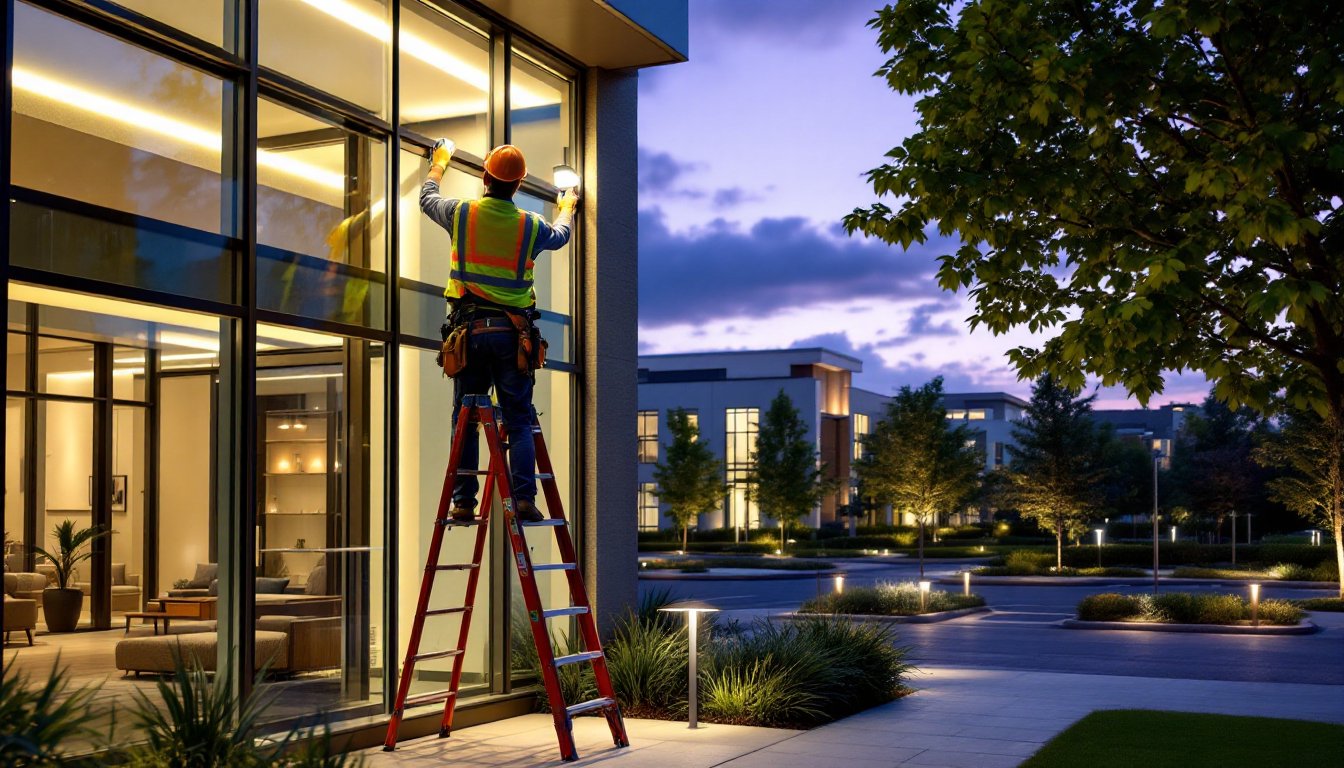

Whether you own a retail storefront, office complex, or hospitality property, commercial outdoor lighting is about more than aesthetics, it’s a safety, security, and energy efficiency investment. A skilled commercial outdoor lighting service contractor understands local building codes, can design layouts that maximize visibility without light pollution, and knows the difference between fixture types that actually last versus those that need replacing every season. This guide walks you through what these professionals do, how to pick the right one, and what you can realistically expect to spend. The goal is to help you make an well-informed choice that protects your property, reduces operating costs, and keeps your property looking professional year-round.
Key Takeaways
- A commercial outdoor lighting service contractor handles the complete lifecycle of exterior lighting systems, including design, installation, electrical integration, and ongoing maintenance while ensuring compliance with local building codes and NEC requirements.
- LED fixtures are the energy-efficient standard for commercial outdoor lighting, consuming 70-80% less energy than traditional HID lamps and lasting 25,000+ hours, with most properties achieving full ROI in 4-6 years.
- When selecting a contractor, verify state electrical licenses, insurance coverage, and request references from at least three completed commercial projects before making your hiring decision.
- Commercial outdoor lighting budgets typically range from $5,000–$15,000 for modest retrofits to over $100,000 for multi-building campuses, with costs influenced by property size, fixture type, and electrical infrastructure needs.
- Smart controls, motion sensors, and dusk-to-dawn timers paired with LED systems further reduce operating costs and can be offset by utility rebates that cover 20-30% of material expenses in many jurisdictions.
- Prioritize long-term value and contractor partnerships over the lowest bid, as experienced contractors who specify durable fixtures and include maintenance plans cost significantly less over time than those cutting upfront prices.
What Commercial Outdoor Lighting Contractors Do
A commercial outdoor lighting contractor is responsible for the complete lifecycle of your property’s exterior lighting system. This includes initial site assessment and design, equipment sourcing, installation, electrical integration, and ongoing maintenance. These professionals typically hold state or local electrical licenses and understand National Electric Code (NEC) requirements for outdoor installations, which vary by jurisdiction. They assess factors like foot-candle requirements (brightness measured per square foot), color temperature (warm vs. cool light), fixture durability, and power consumption to create layouts that meet both functional and aesthetic goals. Beyond installation, reputable contractors also handle seasonal maintenance, bulb replacement, fixture repair, and system upgrades when energy-efficient alternatives become available. They’re accountable for permit coordination, inspection approvals, and ensuring the system complies with local ordinances around light spillage and operating hours.
Key Services and Installation Options
LED and Energy-Efficient Lighting Solutions
LED fixtures have become the standard for commercial outdoor work because they consume 70-80% less energy than traditional high-intensity discharge (HID) lamps and last 25,000+ hours versus 8,000-10,000 for metal halide. A good contractor can evaluate your existing infrastructure and either retrofit current fixtures with LED bulbs or replace entire units if rewiring is more cost-effective. LED systems also pair well with smart controls, motion sensors, dusk-to-dawn timers, and dimming capabilities, that further slash operating costs. The upfront cost of LED conversion is offset by lower energy bills and reduced maintenance over 5-7 years. Contractors often run energy audits to forecast your actual savings based on your property’s usage patterns and local utility rates.
Landscape and Accent Lighting
Beyond functional area lighting, contractors design aesthetic layers using uplighting, spotlights, and pathway lighting to highlight architectural features, landscaping, and brand identity. Uplighting accents building facades or tree canopies: spotlights draw focus to signage or water features: pathway lights define walkways and parking lot circulation for safety. Proper color temperature selection matters here, warm white (2700K-3000K) suits hospitality settings, while cooler white (4000K-5000K) works better for office parks and retail. Contractors coordinate fixture placement, wiring conduit routing, and pole or wall-mount installation to minimize visual clutter while maximizing coverage. They’re also attuned to light spill regulations, which limit how much light reaches adjacent properties, important for good neighbor relations and compliance with dark-sky ordinances in some areas.
How to Choose the Right Contractor for Your Property
Start by verifying licensure and insurance. A qualified commercial outdoor lighting contractor holds an active electrical license in your state and carries liability and workers’ compensation coverage, non-negotiable for a property you own. Request references from at least three completed commercial projects similar in scope to yours, and contact them directly to ask about timeliness, communication, and post-install support. Check online reviews on platforms like HomeAdvisor and industry directories, but weight custom testimonies from actual clients more heavily than generic ratings. Interview 2-3 contractors and ask them to walk you through their design process, equipment choices, and warranty terms. Honest contractors explain trade-offs openly, for example, “a lower-cost fixture will work fine, but this premium unit comes with a 10-year warranty and costs less to maintain.” Avoid contractors who pressure you into upgrades you don’t need or promise savings figures without backing them up with usage data. Ask whether they handle permit applications and final inspections: if you have to chase those down yourself, you’ve picked the wrong person. Chemistry matters too, you’re investing in a long-term relationship that spans installation and years of maintenance calls.
Estimating Budget and Long-Term Cost Savings
Commercial outdoor lighting budgets span a wide range. A modest parking lot retrofit with basic LED fixtures might run $5,000–$15,000 for a small property, while a full system for a multi-building campus can easily exceed $100,000. Costs depend on property size, fixture type, electrical infrastructure upgrades needed, terrain complexity, and local labor rates. Use tools like ImproveNet to gather regional benchmarks, but remember these are starting points, get firm quotes from licensed contractors in your area. A typical breakdown: fixtures and labor account for 60-70%, permits and inspections 5-10%, and contingencies 10-15%. Contractors experienced in your region understand local permitting timelines and cost implications, which saves money upfront. For long-term value, calculate payback period by comparing your current annual lighting costs (energy + maintenance) against projected savings with LED and smart controls. Many commercial properties see full ROI in 4-6 years. Factor in utility rebates too, many jurisdictions offer incentives for LED conversions, sometimes covering 20-30% of material costs. Don’t chase the cheapest bid: focus on value, a contractor who specifies durable fixtures and includes maintenance plans costs less over time than one who slashes upfront price and disappears after installation.
Conclusion
Hiring a commercial outdoor lighting contractor is a smart move that improves safety, enhances curb appeal, and reduces operating expenses when done right. Vet candidates carefully, prioritize long-term partnerships over rock-bottom pricing, and use cost-estimating resources to set realistic expectations. The right contractor becomes an ally in keeping your property secure and attractive for years to come.