

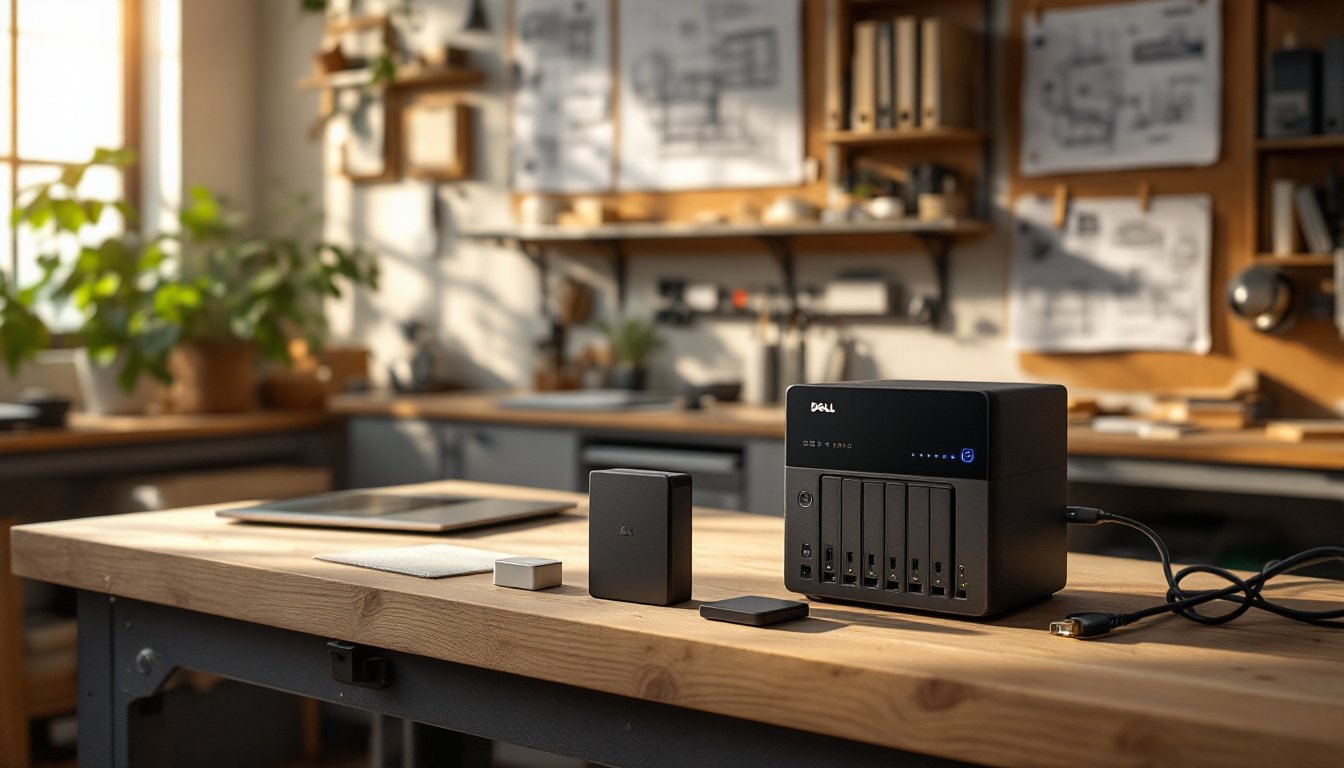

If you’re tackling a home renovation, managing digital files for design projects, or backing up years of family photos, storage space, both physical and digital, becomes a real concern. Dell storage solutions span everything from compact external hard drives that fit in a junk drawer to network systems that quietly handle your whole household’s data needs. Whether you’re storing tool catalogs, design mockups, or security footage from your DIY workshop, the right storage choice keeps your projects organized and your data safe. This guide walks you through Dell’s lineup and helps you pick the option that actually matches your setup, not just what a sales rep pushes.
Key Takeaways
- Dell storage solutions range from affordable portable SSDs ($30–60) to enterprise-grade network systems, giving homeowners and DIY enthusiasts options for every budget and data volume.
- Assess your actual storage needs honestly—most homes require 1–4TB for photos and videos, while 4K video or blueprint archives demand higher capacity with room to grow.
- Network storage (NAS systems) is ideal for families or teams needing shared access, while portable external drives work best for solo users or occasional backups.
- Implement the 3-2-1 backup rule: keep three copies of important files on two different media types with one stored offsite to prevent permanent data loss.
- Proper setup and maintenance—including quarterly storage reviews, labeling drives, testing backups annually, and keeping devices cool—ensures Dell storage systems remain reliable long-term.
- Use hardware or software encryption for sensitive documents, property records, and personal files to protect your data if a device goes missing or is stolen.
Understanding Dell’s Storage Product Line
Dell manufactures storage across two main buckets: consumer-grade gear for homes and DIY spaces, plus enterprise-level solutions that happen to work in larger home setups.
Desktop and Portable Storage Options
For most homeowners and hobbyists, Dell portable external drives and desktop storage units are the workhorses. Dell’s Portable SSD (solid-state drive) line offers capacities from 256GB to 2TB in a package the size of a thick credit card. These drives connect via USB-C and offer faster data transfer than older mechanical drives, typically 540 MB/s or higher, which means you’re not staring at a progress bar while moving a season of home renovation videos.
Desktop external drives like the Dell Easystore series (available in various capacities up to 18TB) stay put on a shelf or workbench. They’re ideal if you’re archiving old project files, storing high-resolution design images, or running regular backups. The larger capacity means fewer drives cluttering your space.
Both types connect via USB 3.0 or USB-C, so compatibility with laptops, desktops, and even some tablets is straightforward. Cold storage, drives you only access occasionally, is where these shine. A 256GB portable drive typically costs $30–60, while an 8TB desktop drive runs $100–180 depending on speed tier and brand positioning. According to detailed reviews of storage devices, external drives remain the most practical off-site backup solution for home users.
Network and Server-Class Solutions
For DIY enthusiasts building a proper home network, Dell PowerVault systems and NAS-like setups provide centralized storage accessible from multiple devices. These aren’t typical plug-and-play units: they require some networking knowledge. A basic Dell PowerVault NE1 or MD1400 can hold 12–48 drives depending on the model, giving you massive capacity and redundancy (so if one drive fails, your data stays intact).
These systems use RAID (Redundant Array of Independent Disks) configurations, think of it as backup insurance built into the hardware itself. If you’re serious about protecting decades of family photos, architectural drawings, or workshop documentation, RAID setup is genuinely worthwhile. But, setup involves assigning network IP addresses, configuring storage pools, and understanding fault tolerance. Most homeowners find a mid-range NAS unit from Dell or a partner more practical than full enterprise gear.
For smaller homes, Dell’s entry-level network storage (2–4 bays) offers a better balance of capacity, ease-of-use, and cost. These units typically plug into your home network via Ethernet and appear as a shared drive on any connected computer. Storage capacities range from 4TB (small households) to 32TB (families or makers with heavy media projects).
Cost expectations: A 2-bay NAS starts around $150–300, while a 4-bay system runs $300–600. Add the cost of compatible drives, usually $60–150 per drive depending on capacity and speed class, and a modest network storage setup costs $500–1,200 fully outfitted.
How to Choose the Right Dell Storage for Your Home Setup
Picking storage isn’t complicated if you ask yourself three questions first.
How much data do you actually have? Count it honestly. A library of home photos and videos from the past five years, plus current projects, often adds up to 1–4TB. If you’re storing 4K video, blueprint archives, or large design files, bump that estimate higher. Don’t buy a 12TB system today because you might need it: get a setup with room to grow. A 4TB external drive now with the option to add a second later often beats guessing.
How often do you need to access the files? If you’re backing up and rarely touching the files again, a slower, less expensive drive works fine. If you’re editing those files regularly, say, pulling construction photos into design software every week, speed matters. Portable SSDs are faster but pricier per gigabyte. Network storage is quick once set up and spreads cost across multiple devices.
Who else needs access? Solo homeowner? An external drive that follows you from room to room is fine. Family wanting to share project files, security recordings, or photo libraries? Network storage makes sense because everyone logs in from their own device. Contractors or collaborators joining the project? A simple external drive you hand off is simpler than getting a consultant onto your home network.
Your venue matters too. A workshop prone to dust benefits from a drive sitting on a shelf indoors, not plugged in at the workbench. A home office where multiple people grab files suggests network storage. There’s no wrong choice, just a better fit for your specific setup.
Build in redundancy. Don’t keep one copy of important files. The 3-2-1 backup rule, three copies of data, on two different media types, with one offsite, is the standard that actually prevents disasters. An external drive on your shelf is convenient but vulnerable to theft or fire. Pair it with cloud backup or a second drive you store elsewhere.
Installing and Optimizing Your Dell Storage Solution
Setup varies wildly depending on which product you choose, so here’s the practical breakdown.
Portable and desktop external drives need almost nothing: connect via USB, let the computer recognize the drive, and start moving files. On first use, format the drive to match your system (NTFS for Windows, APFS for Mac). This wipes any factory data and sets up the file system. It takes two minutes. Avoid leaving drives plugged in 24/7 if possible: they’ll last longer. Store them in a cool, dry spot, not on a sunny windowsill or next to a heater.
Network storage demands more setup. After unboxing, you’ll assign it an IP address (usually via a web browser), configure RAID settings, and create user accounts if multiple people need access. Plug it into your network switch or router with an Ethernet cable, don’t rely on Wi-Fi for storage: it’s too slow and unreliable for large file transfers.
Create folders on the network drive that mirror your projects: one for renovation photos, one for design files, one for supplier documentation. This prevents the “where did I save that?” chaos. Set automatic backups on computers that feed files to the network drive: most systems allow scheduled sync. Popular Mechanics offers detailed guidance on setting up home networks, which applies here.
Optimize by deleting redundant files regularly. DVR footage, old project proofs, and superseded plans accumulate fast. Aim to review storage quarterly and prune ruthlessly. Performance degrades when drives run past 85% capacity, so leave some breathing room.
Back up the drive itself. If your network storage contains irreplaceable content, family photos, professional design work, add that external drive we mentioned earlier as a secondary backup. Yes, two devices sounds redundant, but drive failure is not a question of if, but when. Good Housekeeping tests and reviews home backup solutions, and experts consistently recommend the layered approach.
Practical Storage Tips for Homeowners and DIY Enthusiasts
A few field-tested habits prevent headaches.
Label everything clearly. A drive sitting in a box unmarked is useless the moment you need it. Use a label maker or durable marker to write the drive’s contents, date added, and capacity. Sounds obvious, but you’ll thank yourself in two years when you’re hunting that contractor’s final walkthrough video.
Organize folders by project, not by file type. Instead of “Photos,” “Videos,” “Documents,” create “Kitchen Remodel 2025,” “Workshop Setup,” “Property Records.” When you need something, you’re thinking in projects, not file categories. Naming consistency matters: decide on a format (Date_ProjectName_Description.extension) and stick to it.
Keep drives cool. Hard drives and SSDs fail faster when hot. Ensure ventilation around desktop drives, and don’t leave portable drives in a hot car. If a drive feels warm to the touch, it’s working too hard. Move it to a cooler spot or run fewer background tasks on your system.
Test your backups. Once a year, try restoring a file from your backup drive or network storage. If you’ve never actually recovered a file, you don’t know if the system works. A backup that hasn’t been tested is just a hope, not a solution.
Use encryption for sensitive files. If your home storage contains financial documents, property records, or personal images, encrypt the drive. Most Dell portable drives support hardware encryption (set a password): network systems offer software encryption. Slightly slower performance is a fair trade for knowing your data is protected if a device goes missing.
Keep power and USB cables labeled and organized. A tangle of cables breeds mistakes. Velcro ties cost nothing and prevent pulling the wrong drive offline mid-backup.
Conclusion
Dell storage solutions run the gamut from a $40 external drive that slides into a drawer to a networked system managing terabytes for an extended household. The right choice depends on your data volume, access habits, and budget, not hype. Start with an honest assessment of what you need to store and who needs to reach it. Add a second backup layer for irreplaceable files. Set it up properly, label it, and test it once a year. That’s the system that actually protects your projects and peace of mind.