

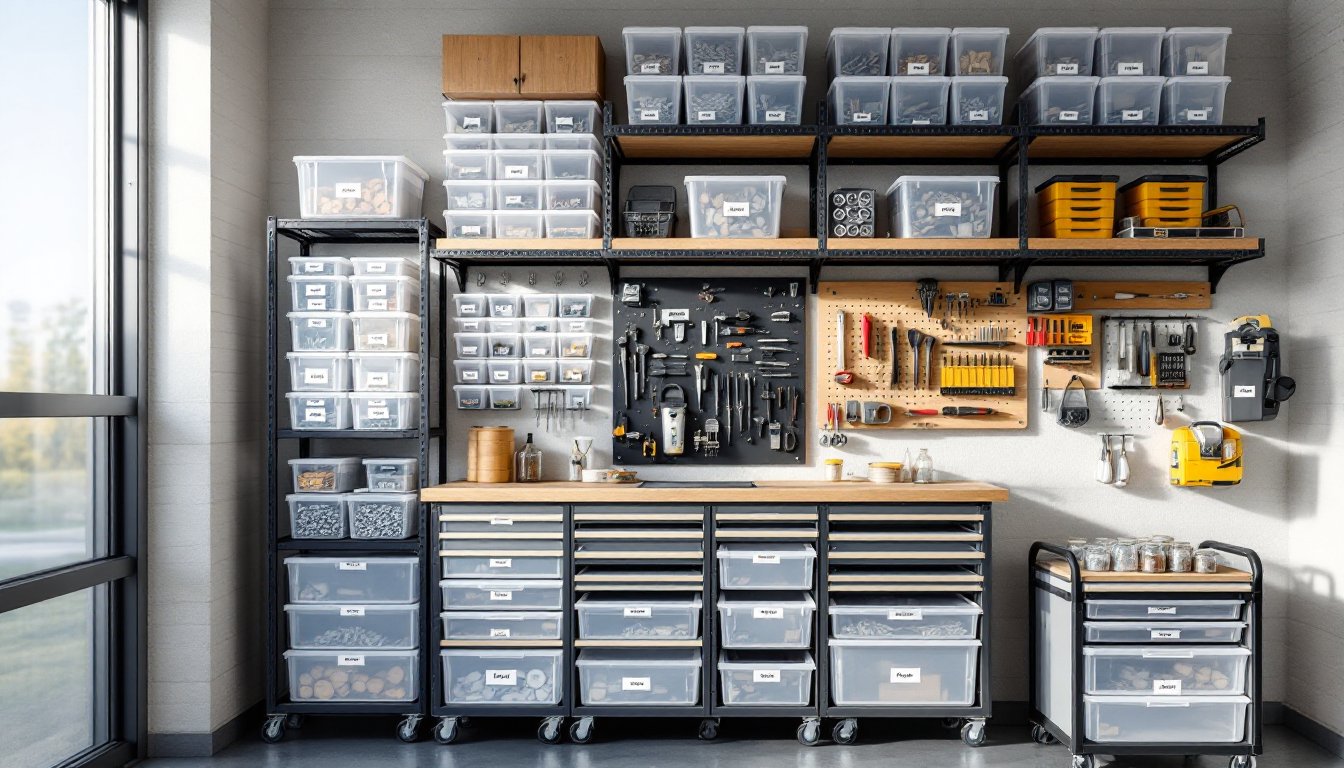

Small items scatter. Loose hardware, craft supplies, batteries, cables, seasonal decorations, they pile up in junk drawers, under shelves, and in forgotten corners. Before long, you’re buying duplicates because you can’t find the original, or you’ve wasted an afternoon hunting for a single screw. Proper small item storage isn’t about having a pristine space: it’s about knowing exactly where things are and grabbing them when you need them. This guide walks through practical warehouse-style storage solutions that work in homes, garages, and workshops, from simple clear bins to smart cabinet layouts that save time and money.
Key Takeaways
- Warehouse storage solutions for small items prevent wasted time and money by keeping supplies organized and easily accessible rather than scattered in junk drawers.
- Clear plastic bins with clear labels are the foundation of effective small item organization, allowing you to locate hardware, fasteners, and supplies at a glance without opening multiple containers.
- Multi-drawer organizer cabinets and drawer dividers transform storage efficiency by sorting items into specific categories, so you access what you need without rifling through unrelated items.
- Strategic placement of small item storage near where items are actually used—batteries by your bedroom, cleaning supplies under the kitchen sink—eliminates frustration and saves time daily.
- Budget-friendly warehouse storage ideas like repurposed cabinets, DIY pegboards, magnetic strips, and upcycled containers deliver effective organization without expensive commercial systems.
- Quarterly maintenance reviews and a simple ‘return to designated spot’ rule keep warehouse storage systems functional long-term, preventing clutter from accumulating and protecting your investment in supplies.
Why Proper Small Item Storage Matters
Disorganized small items create real costs, hidden expenses in time, money, and frustration. When you can’t locate hardware or supplies, you buy replacements. When tools sit in random boxes instead of accessible spots, projects stall. When shelves overflow with loose items, storage becomes useless.
Proper small item organization prevents these problems. A labeled clear bin system means you spend minutes, not hours, locating what you need. Dedicated drawer dividers for fasteners, electrical parts, or craft supplies eliminate guesswork. Vertical wall storage frees up floor and shelf space, making a garage or workshop feel bigger and more functional.
Warehouse-style organization also protects investments. Fasteners, electronics, and seasonal items stay clean and protected from dust, humidity, and damage when stored in appropriate containers. Tools and supplies last longer. You avoid emergency trips to the hardware store for items you already own. Over a year, this savings compounds.
Best Container Options for Small Items
Clear Bins and Plastic Organizers
Clear plastic storage bins remain the backbone of small item organization. Unlike opaque containers, you see contents at a glance without opening every box. Invest in sturdy polypropylene or polycarbonate bins, they resist cracking, stack securely, and last years. Size matters: 6–12 quart bins work well for general hardware, fasteners, and craft supplies, while smaller organizers suit fine items like screws, washers, and rivets.
Label everything clearly. Use a label maker or waterproof tape with a permanent marker. Include not just the item name but rough quantities or dates (“screws 1¼” galv, ~50″ or “holiday lights tested 2025”). Over time, these details save guesswork and prevent buying what you already have.
Stack bins on shelves, under benches, or on rolling carts for portability. Ensure shelves support the weight, a loaded 12-quart bin weighs 20–30 pounds, and a full shelf can exceed 100 pounds. Use appropriate shelving rated for your load.
Drawer Dividers and Compartmentalized Systems
Drawer dividers transform a standard junk drawer into a functional organizer. Modular divider sets let you customize compartments to fit your items, narrow slots for bits and blades, deeper sections for larger hardware. Wood, plastic, or fabric-lined dividers all work: choose based on aesthetics and durability.
For heavier-duty organization, consider a multi-drawer organizer cabinet (often called a tool cabinet). Metal or plastic versions with dozens of small drawers suit workshops and garages. Each drawer can hold specific categories: wood screws, machine bolts, nails, wall anchors, electrical connectors. This tiered approach beats a single large bin, you access what you need without rifling through unrelated items.
Drawer systems also work in kitchen cabinets, bathrooms, and closets. Soft-close drawers reduce noise and prevent pinched fingers, especially important in homes with kids. Customizable storage solutions from IKEA Hackers often showcase creative drawer modifications that homeowners can adapt affordably.
Smart Storage Locations Around Your Home
Location shapes usability. Store frequently used small items, batteries, light bulbs, basic tools, where you use them. A charging station near your bedroom works better than one buried in the garage. Cleaning supplies live under the kitchen sink, not in a storage room.
Garages and workshops suit bulk item storage. Install wall-mounted pegboards or slat-wall systems for power tools, wrenches, and bit sets. Suspend bins from ceiling joists using eye bolts and heavy-duty wire, freeing valuable shelf space. Ensure joists can handle added weight: 2×8 or larger joists typically support 25+ pounds per foot safely, but confirm your structure.
Kitchens benefit from drawer inserts and tiered shelf organizers. Small appliance parts, cooking thermometers, measuring spoons, and specialty tools nest neatly in compartments. Kitchen design experts at The Kitchn emphasize that drawer organization eliminates daily frustration and saves counter space.
Bathrooms and mudrooms use shallow shelves or medicine cabinet inserts. Stock these with first-aid supplies, medications, seasonal items, or small tech chargers. Closets accommodate seasonal decorations and off-season clothing in labeled bins stacked three-high.
Small apartments require vertical thinking. Apartment Therapy showcases space-saving strategies for studios and one-bedrooms, including wall-mounted organizers, under-bed storage, and closet maximization. Over-the-door shoe organizers, command hooks, and tension rods add storage without drilling or permanent changes, useful for renters.
DIY and Budget-Friendly Storage Ideas
Custom storage doesn’t require expensive systems. Repurpose old kitchen cabinets, filing cabinets, or dresser drawers into workshop organizers. Sand, paint, and add label strips, and you’ve created tailored storage for a fraction of new cabinetry costs.
Make dividers from scrap wood, pegboard scraps, or even cardboard inserts. Cut wood strips to size, sand smooth, and paint or stain to match your space. For drawers, hot-glue felt pads to the bottom of wooden dividers so they slide easily without scratching.
Wall space is free, install floating shelves, pegboards, or wall-mounted baskets to hold small items. Pegboards especially offer flexibility: rearrange hooks, baskets, and shelves as needs change. A 4×8 sheet of pegboard costs $20–35, and hardware runs another $15–25, giving you dozens of storage spots for less than a commercial organizer.
Magnetic strips store metal tools, screwdriver bits, or craft scissors. Adhesive-backed varieties work on metal cabinets: screw-mounted strips handle heavier loads and last longer.
Transparent mason jars or salvaged glass containers work for visible, stackable storage, nails, washers, or dried craft beads stay visible and protected. Label the lid with tape or a paint pen.
Upcycled solutions cut costs further. Tin cans wrapped in fabric tape become pencil holders or fastener containers. Egg cartons sort small screws, washers, or jewelry. Shoe boxes lined with dividers organize under-bed storage. These hacks cost nearly nothing and suit tight budgets without sacrificing function.
Maintaining and Organizing Your Small Item Storage
Organization only works if you maintain it. Set a quarterly review: check bins for items no longer needed, remove expired batteries or dried-out supplies, and consolidate partially full containers.
Establish a simple rule: return items to their designated spot after use. If every fastener, tool, or supply returns home, chaos doesn’t accumulate. Involve household members, everyone benefits from knowing where things live.
Keep an inventory spreadsheet or mobile photo log. Snap pictures of bin contents and note quantities. When restocking, you avoid duplicates and catch items running low. This sounds tedious but saves hours hunting for missing pieces.
Rotate stock using FIFO (First In, First Out) logic: place newer items behind older ones so older supplies get used first. This prevents hoarding expired batteries or dried adhesive.
Adjust systems as habits change. If a storage location never gets used, relocate bins or containers closer to where items are actually needed. Storage serves your workflow, not the reverse. Over time, you’ll refine what works and what doesn’t.
Final thought: avoid over-buying. Small items breed clutter fast. Before restocking nails, screws, or fasteners, count what remains. A single assortment box often outlasts expectations. Buy what you’ll use within a few years, not “just in case” supplies gathering dust.