

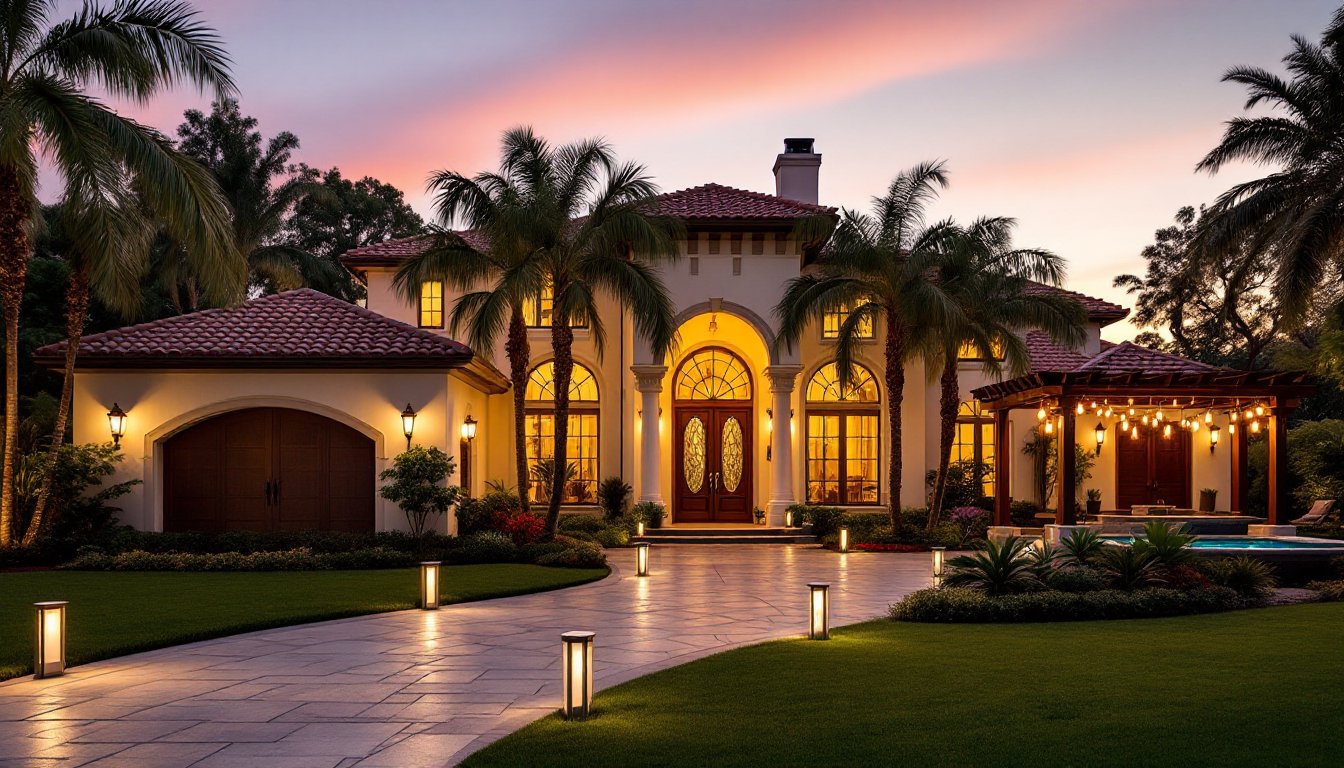

Naples, Florida offers year-round sunshine and tropical beauty, but smart outdoor lighting design can transform your landscape from sunset to starlight. Whether you’re looking to highlight architectural features, create an inviting entryway, or extend your entertaining space into the evening, outdoor lighting serves both practical and aesthetic purposes. This guide walks you through everything a Naples homeowner needs to know about choosing, designing, and installing outdoor lighting that complements your Florida home while standing up to the region’s unique climate challenges. Let’s shed some light on how to brighten up your outdoor space.
Key Takeaways
- Naples outdoor lighting enhances curb appeal, security, and livability while extending your entertainment space into the evening year-round.
- Use the three-layer lighting approach—ambient for navigation, accent to highlight features, and task for functional areas—to create a cohesive, professional design.
- Choose coastal-rated, stainless-steel, or marine-grade fixtures to withstand Naples’ salt air, humidity, and UV exposure and prevent costly premature replacement.
- LED bulbs are essential in Florida’s hot climate because they generate less heat, reduce cooling costs, and last 25,000–50,000 hours compared to traditional options.
- Warm white (2700K–3000K) color temperature creates an inviting atmosphere while deterring insects, and dimmers let you adjust mood for entertaining or relaxing.
- Hire a licensed electrician for permits, new circuits, and underground wiring to ensure code compliance and avoid safety hazards in your Naples home’s outdoor lighting system.
Why Outdoor Lighting Matters for Your Naples Home
Outdoor lighting isn’t just about visibility after dark, it’s a foundational element of your home’s curb appeal, security, and livability. Well-planned lighting can double the perceived size of your landscape, create welcoming entry points, and allow you to use your outdoor spaces well into the evening without sacrificing safety.
For Naples residents specifically, outdoor lighting plays a practical role in security and navigation. The lack of street light coverage in many residential areas means you’ll need to light pathways, driveways, and entry points yourself. Beyond functionality, outdoor lighting sets the mood for gatherings and entertaining. Warm ambient light near a patio creates intimacy, while accent lighting on trees or architectural details adds visual depth and curb appeal that increases property value.
The challenge in Naples is balancing aesthetics with durability. Salt air, humidity, and intense UV exposure mean your fixtures and wiring must resist corrosion and weathering far more aggressively than in milder climates. Choosing the right materials and installation methods from the start prevents costly replacements and keeps your system running safely.
Key Outdoor Lighting Types for Florida Homes
Ambient, Accent, and Task Lighting Explained
Professional landscape designers use three lighting categories to layer depth and function throughout outdoor spaces. Understanding these categories helps you plan a cohesive system rather than scattering fixtures randomly.
Ambient lighting provides overall illumination and safety. Think path lights along a walkway, overhead fixtures above a patio, or floodlights washing your front facade. This layer should be bright enough to navigate safely without creating harsh shadows or glare. In Naples, uplighting through palm fronds or indirect glow from pergola-mounted fixtures works beautifully for ambient effect.
Accent lighting highlights specific features, a sculptural tree, stone wall, water feature, or architectural detail. It’s typically brighter and more directional than ambient light, drawing the eye to points of visual interest. Uplighting is popular in Florida landscapes, where specimens like Royal Palms and Live Oaks make striking silhouettes when lit from below. Accent lights are usually 50–75% as bright as ambient fixtures to avoid overwhelming the space.
Task lighting serves functional needs: illuminating an outdoor kitchen prep area, a reading nook, or a pool deck. It’s typically bright and direct. A well-designed Naples outdoor space uses all three layers in balance. Start with ambient fixtures to light pathways and gathering areas, add accent lights to create visual interest, then introduce task lighting where you actually work or relax. This layered approach feels natural and prevents the harsh, over-lit look of a parking lot.
Design Strategies for Naples’ Tropical Climate
Heat and Humidity Considerations
Naples’ subtropical climate, with temperatures regularly above 90°F and humidity levels that hover around 80% most of the year, demands fixtures rated for coastal and humid environments. Standard outdoor lighting fixtures will corrode within a few seasons: coastal-rated or stainless-steel options are worth the upfront investment.
When selecting fixtures, look for UL-rated (Underwriters Laboratory) weatherproof enclosures with marine-grade finishes. Brass, copper, and aluminum with proper sealing resist salt spray better than painted steel. LED bulbs are especially important in Naples because they generate far less heat than incandescent or halogen alternatives. This reduces stress on fixtures, lowers your cooling costs, and extends bulb life in a warm climate.
Wiring and connections are equally critical. Underground wiring should be direct burial rated (marked DB or UF-B). All connections require waterproof junction boxes rated for outdoor use. If you’re running fixtures from an existing circuit, verify the circuit can handle the load, most outdoor circuits are 15 amps, which limits how many fixtures you can safely run. Many Naples homeowners with extensive outdoor lighting upgrade to dedicated 20-amp circuits for better reliability.
Timing and automation work beautifully in Naples. Because sunset times vary widely year-round (around 5:30 PM in December, nearly 8:30 PM in June), smart controllers with photocell sensors automatically adjust on-time to match sunset. This keeps your landscape looking intentional and saves energy. Consider linking outdoor lighting to motion sensors near entryways, they enhance security while avoiding unnecessary nighttime illumination.
Popular Fixture Styles for Florida Homes
Naples architecture ranges from Mediterranean revival to contemporary, and outdoor lighting fixtures should reflect your home’s style while performing in a harsh environment. Several fixture types have earned popularity among Florida homeowners for both durability and aesthetic appeal.
Lantern-style fixtures with glass panels and metal frames work well for entryways and patios. Look for fixtures with stainless steel or marine-grade brass construction, avoid plain steel, which rusts quickly in salt air. Wall-mounted lanterns flanking an entry door create formal, welcoming appeal and diffuse light evenly.
Uplighting bollards (short, cylindrical path lights) line driveways and walkways throughout Naples. They’re low-profile, won’t be damaged by lawn equipment, and cast subtle directional light. LED versions consume minimal power and run for years without maintenance. Stainless-steel bollards resist corrosion better than plastic alternatives, even though they cost more upfront.
Spotlight and flood fixtures are workhorses for accent and task lighting. Adjustable spotlights let you target architectural details or specimen plants. For larger areas like pool decks or entertainment spaces, recessed soffit lights or deck rail lights offer sleek, modern appeal. Companies like Southern Living frequently feature modern Florida porch designs that blend neutral-toned fixtures seamlessly with landscape architecture.
Deck and step lights are essential in Naples, where outdoor entertaining happens year-round. Recessed deck lights mounted in composite or wood steps cast ambient glow without creating tripping hazards. They’re functional and nearly invisible during the day.
Color temperature matters in Florida’s tropical setting. Warm white (2700K–3000K) fixtures feel inviting and are less likely to attract insects than cool whites. Dimmer-compatible LEDs let you adjust mood from bright entertaining light to soft evening ambiance.
Installation and Maintenance Tips
Before digging trenches or mounting fixtures, verify local codes with Naples’ Building Department. Electrical work beyond simple fixture replacement often requires a permit and inspection, especially if you’re running new circuits or extending service. Many Naples homeowners hire a licensed electrician for the heavy lifting and handle simpler tasks themselves.
Basic installation checklist:
• Plan your layout on paper first, noting locations of all fixtures, running voltage and pathways underground or overhead, and identifying existing circuits or panel upgrades you’ll need.
• Bury direct burial cable at least 18 inches deep (verify with your local utility locating service before digging, call 811 in Florida).
• Use waterproof junction boxes rated for outdoor use at all connection points.
• Mount fixtures securely with corrosion-resistant fasteners (stainless steel or marine-grade hardware).
• Test all circuits and fixtures after installation and before burying wiring.
Maintenance in Naples’ climate is non-negotiable. Salt air and humidity corrode even good-quality fixtures if neglected. Perform quarterly inspections: check for water intrusion in fixture seals, verify no cracks in lenses, and clear any debris from fixtures or wiring. Wipe down metal fixtures with a soft cloth and fresh water every few months to remove salt spray buildup.
LED bulbs last 25,000–50,000 hours, but ballasts and drivers can fail earlier in extreme heat. Replace bulbs and components before they fail completely, running dead fixtures stresses remaining circuits. Keep spare bulbs, gaskets, and hardware on hand: minor repairs done promptly prevent cascade failures.
Smart systems and automation add convenience but require annual software updates and occasional hardware resets. Photocell sensors accumulate dust and salt residue: clean them quarterly to maintain accurate sunset detection. If your system loses sync or behaves erratically, a factory reset or firmware update usually solves the issue faster than troubleshooting individual fixtures.
Hiring a licensed electrician for major work, panel upgrades, new circuits, or extensive underground runs, is money well spent in Naples. They’ll ensure code compliance, proper grounding, and GFCI (ground fault circuit interrupter) protection where required. Mistakes in outdoor electrical work can result in fires, shocks, or code violations that complicate future home sales.