

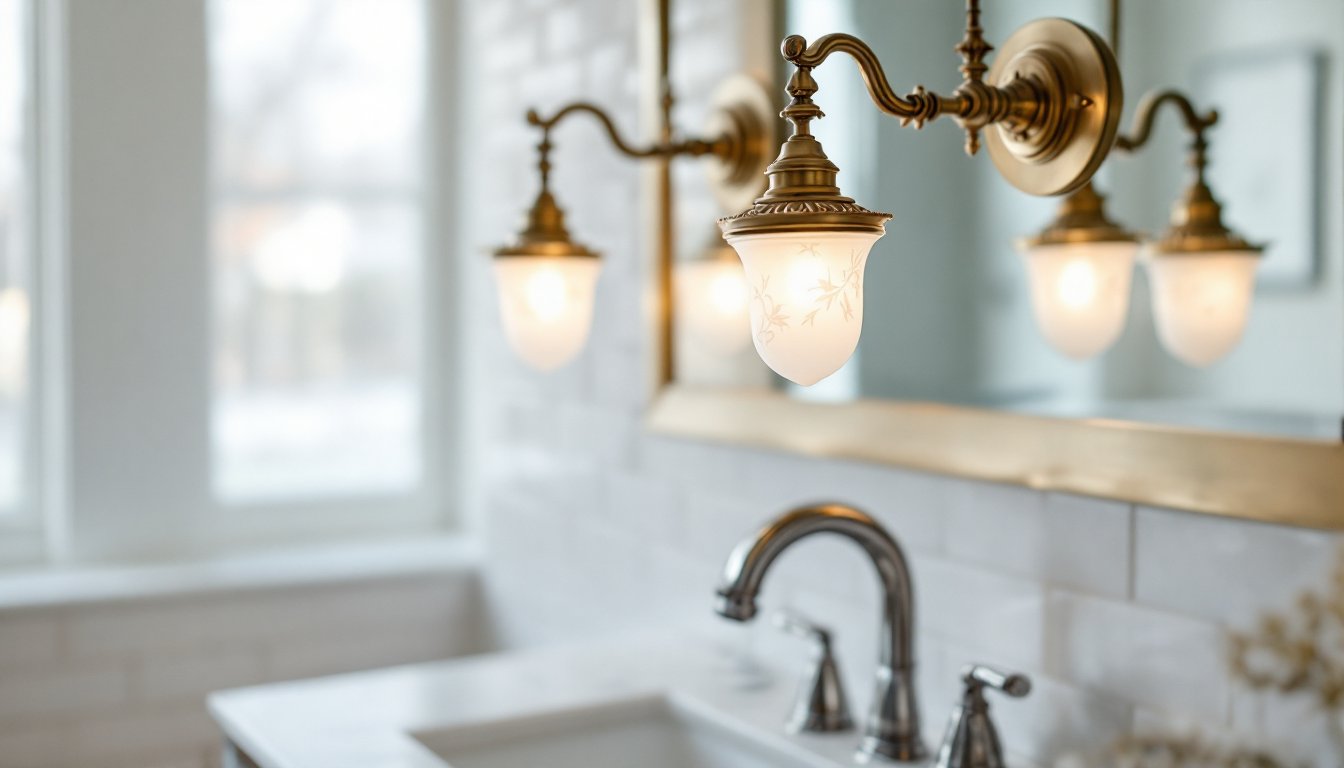

Antique vanity lighting brings warmth, character, and a sense of history to modern bathrooms. Whether you’re drawn to the ornate details of Victorian sconces or the geometric clean lines of Art Deco fixtures, antique-inspired lighting does more than illuminate a mirror, it sets the mood for your entire bathroom space. Homeowners increasingly blend vintage aesthetics with contemporary function, creating bathrooms that feel both timeless and livable. This guide walks you through selecting, installing, and maintaining antique vanity lighting that works for your home, your space, and your daily routine.
Key Takeaways
- Antique vanity lighting combines historical charm with modern function, with Victorian fixtures costing $150–$800 for genuine pieces and Art Deco designs offering bold geometric alternatives at $80–$400 for reproductions.
- Choose vanity lighting width at approximately 75% of your mirror width, position fixtures 60–66 inches above the floor, and aim for 70–100 foot-candles to minimize shadows and provide optimal grooming light.
- LED bulbs in warm white (2700K) mimic vintage aesthetics while consuming only 9–12 watts, lasting 15–25 years, and delivering the same aesthetic warmth as original incandescent bulbs.
- Brass and bronze fixtures develop authentic patina over time but require monthly dusting and periodic specialized cleaning to maintain their beauty without harsh chemicals.
- Protect antique vanity lighting from moisture damage by running exhaust fans during and 30 minutes after showers, maintaining 40–50% humidity, and avoiding direct water exposure near electrical housings.
- Installation complexity ranges from 30 minutes for replacing existing fixtures to requiring a licensed electrician for new electrical work, with safety protocols like power shutoff and voltage testing essential before starting.
Understanding Antique Vanity Lighting Styles
Victorian and Edwardian Fixtures
Victorian and Edwardian vanity lights dominated bathrooms from the 1880s through the 1920s. These fixtures typically feature brass or bronze bases with frosted or etched glass shades, often in delicate floral or geometric patterns. The look is ornate without being fussy, think curved arms, decorative finials, and warm brass tones that develop a beautiful patina over time.
What makes Victorian fixtures special is their emphasis on craftsmanship. Brass isn’t just plated: it’s solid throughout the fixture body. Shades are often hand-blown glass, meaning no two are exactly alike. If you’re hunting for genuine antique pieces, expect to pay anywhere from $150 to $800 per fixture depending on age, condition, and provenance. Reproduction pieces run $75 to $300 and offer the same visual appeal with modern wiring and safety certifications.
Edwardian fixtures evolved from Victorian roots but stripped back some of the ornamentation. Lines became slightly simpler, though details remained elegant. Edwardian sconces work particularly well in smaller bathrooms where Victorian’s heavier presence might overwhelm the space. Homeowners often pair Edwardian fixtures with subway tile or classic white cabinetry for a balanced, heritage bathroom feel.
Art Deco and Mid-Century Modern Designs
Art Deco vanity lighting (1920s–1930s) broke from Victorian excess with bold geometric forms, chrome finishes, and streamlined silhouettes. Think stepped or chevron patterns, mirrored backplates, and fixtures that feel like functional art. These pieces feel at home in bathrooms with black-and-white tile, vintage mirrors, or contemporary vanities with retro nods.
Mid-century modern fixtures (1940s–1960s) took minimalism further. Tapered arms, single-bulb configurations, and materials like teak wood or brushed aluminum became standard. These lights don’t announce themselves: they work quietly in the background while anchoring a design scheme. Mid-century pieces pair beautifully with tile work, shiplap, or industrial-style mirrors.
Both styles emphasize function as form. A 3-light Art Deco fixture with 60-watt equivalent LED bulbs provides ample vanity illumination while maintaining the aesthetic. Reproduction pieces in these styles range from $80 to $400 depending on material quality and electrical components.
Choosing the Right Fixture for Your Bathroom
Selecting antique vanity lighting means balancing visual appeal with practical lighting needs. Start by measuring your mirror width. A standard rule: vanity lighting width should be approximately 75% of mirror width. For a 36-inch mirror, choose a fixture 26 to 28 inches wide. Single-fixture installations work for narrow mirrors (under 30 inches), while dual fixtures or a long vanity strip suits wider mirrors.
Next, consider your bathroom’s existing finishes. Brass fixtures pair naturally with warm wood tones, vintage hardware, and warm white paint. Chrome suits cooler palettes, gray cabinetry, and contemporary vanities. Bronze works almost everywhere and develops a rich patina that hides dust and water spots, practical if your bathroom runs humid.
Light quality matters more than you’d think. Antique fixtures often came with incandescent bulbs, which produced warm but dim light (typically 40–60 watts). Modern LED equivalents deliver the same aesthetic warmth at 2700K color temperature (mimicking vintage soft white) with only 9–12 watts actual consumption. Look for dimmable LED bulbs if your fixture allows dimmer installation. This lets you dial brightness up for makeup application and down for ambient evening light.
Bathroomss with high humidity demand corrosion-resistant materials. Solid brass ages beautifully: plated brass can deteriorate if moisture reaches underlying metal. Stainless steel, powder-coated aluminum, and sealed bronze all handle moisture well. Avoid fixtures with uncoated steel or bare iron in damp spaces, they’ll rust within months.
Resources like design inspiration galleries showcase how real bathrooms incorporate antique lighting into contemporary settings, helping you visualize how a fixture works in context rather than a product photo.
Installation and Lighting Considerations
Installing vanity lighting varies in complexity. If you’re replacing an existing fixture with the same mounting configuration, expect a 30-minute job. If you’re running new electrical or moving the fixture location, you’ll need a licensed electrician and likely a permit.
Before starting, shut off power at the breaker. Test the outlet with a noncontact voltage tester to confirm it’s dead. This isn’t optional, it’s the baseline safety step every installation requires.
For standard sconce installations over an existing box:
- Remove the old fixture by unscrewing the mounting bracket and disconnecting wire nuts.
- Install the new mounting bracket, ensuring it’s level using a torpedo level.
- Connect hot (typically black) and neutral (white) wires using wire nuts, twisting clockwise and crimping with a crimper tool.
- Connect ground wires (copper or green) the same way.
- Carefully push the fixture body onto the mounting bracket and secure with provided screws.
- Restore power and test.
Lighting placement affects how flattering the light feels. Position vanity fixtures 60 to 66 inches above finished floor, or roughly 24 inches above the mirror’s center line. This height minimizes shadows under cheekbones and forehead, the spots that matter for grooming. Fixtures mounted too low create harsh downward shadows: too high and they don’t illuminate the face evenly.
For optimal brightness, aim for 70–100 foot-candles at the vanity surface. A single 15-watt LED bulb (60-watt incandescent equivalent) in a standard fixture reaches about 70 foot-candles in a 5×8 bathroom. Larger bathrooms or those with dark finishes may need dual fixtures or higher wattage. Dimmers let you adjust without rewiring.
Humidity demands proper ventilation. Install your fixture where exhaust fans won’t blow moisture directly at it. If your bathroom lacks ventilation, run the exhaust fan during and for 30 minutes after showers to reduce moisture buildup that can corrode fixtures and shorten LED lifespan.
If you’re uncertain about electrical work, home improvement guides offer detailed walkthroughs for common bathroom projects, and a licensed electrician costs $150–$300 for a straightforward fixture swap, money well spent to ensure safety and code compliance.
Maintenance Tips for Antique Vanity Lights
Antique and antique-style vanity lighting needs minimal maintenance when installed properly, but a little care extends the life and preserves the patina you’ve chosen.
Brass and Bronze Care: These metals develop a natural patina, that darkened, slightly aged appearance. Many homeowners love it: it adds authenticity. If you prefer polished brass, wipe fixtures monthly with a soft, dry cloth and avoid harsh chemical cleaners that strip the protective layer. For stubborn tarnish, use a brass-specific cleaner (like Brasso) sparingly, rubbing in the direction of the grain. Rinse thoroughly and dry immediately.
Glass Shade Cleaning: Frosted or textured glass collects dust, reducing light output over time. Every 2–3 months, unscrew shades (if removable) and wash in warm soapy water with a soft sponge. Dry completely before reinstalling. If shades are fixed, use a soft brush or microfiber cloth to dust the exterior and, if accessible, the interior. Never spray cleaner directly onto fixtures: moisture can seep into the electrical housing.
Humidity Management: The biggest threat to antique fixtures is moisture. Run exhaust fans during and 30 minutes after showers. Wipe visible moisture from fixture bodies if water droplets collect. In high-humidity climates, consider a dehumidifier for the bathroom (set to 40–50% humidity), which protects both fixtures and paint.
LED Bulb Replacement: Modern LED vanity bulbs last 25,000–50,000 hours (roughly 15–25 years in a bathroom), so replacement is rare. When bulbs do burn out, buy warm white (2700K) dimmable LEDs that match the original color. Avoid cool white (4000K or higher) in antique fixtures, it clashes with vintage aesthetics.
Electrical Checks: Every few years, ensure wire nuts are still tight (loose connections generate heat) and no moisture has entered the fixture housing. If you notice flickering, dimming without intention, or a burning smell, turn off the fixture immediately and call an electrician. These signals suggest wiring issues that need professional attention.
Bathrooms inspired by wood-tone heritage designs often pair beautifully with maintained brass or bronze fixtures that develop personality over years of use.
Conclusion
Antique vanity lighting transforms a bathroom from purely functional to genuinely beautiful. Whether you choose ornate Victorian details, streamlined Art Deco lines, or mid-century elegance, the right fixture complements your existing style while delivering the practical light you need daily. Select based on mirror width, finish durability, and light quality, install safely with proper electrical work, and maintain with simple care routines that preserve character without demanding hours of effort. Your bathroom will feel both timeless and truly yours.