

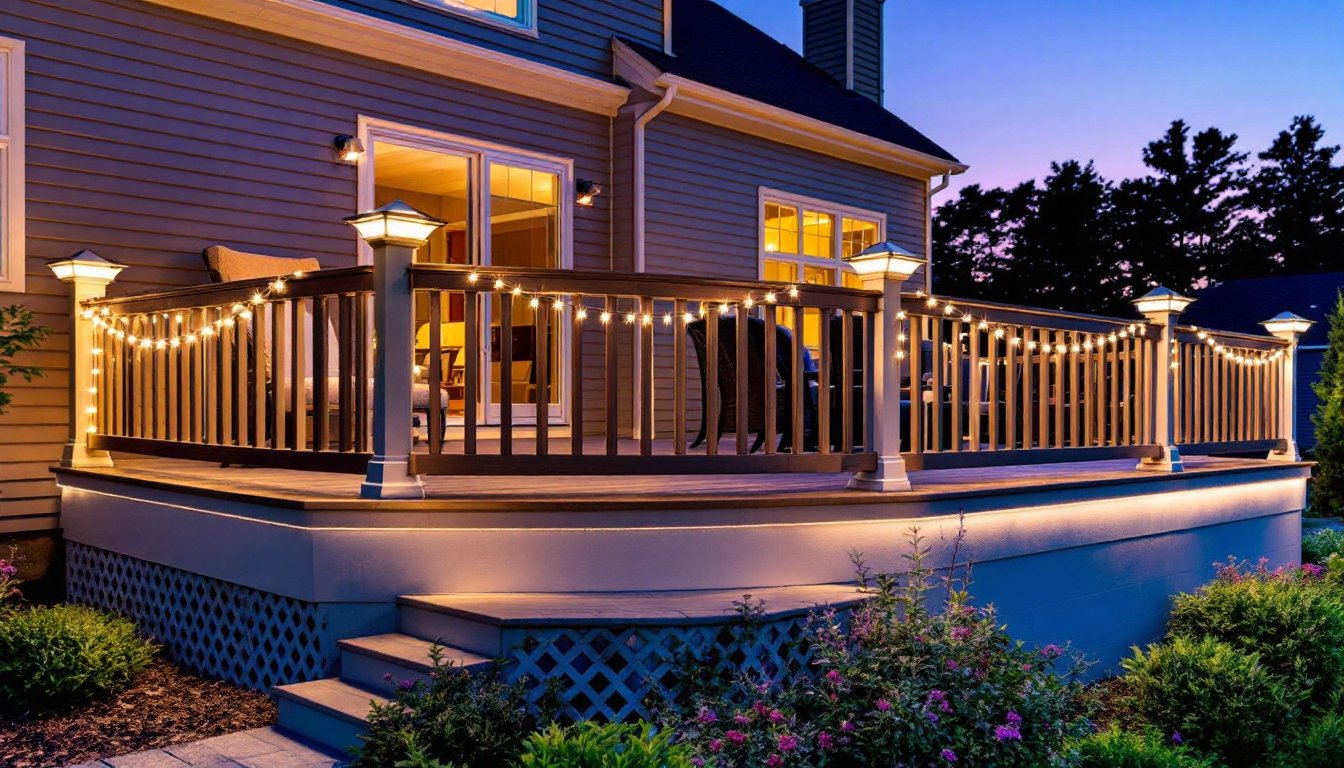

A well-lit deck does more than extend your living space into the evening, it transforms how you use your outdoor area. Good deck railing lighting improves safety, highlights architectural features, and creates the mood for everything from family dinners to quiet evenings. The range of options available today makes it possible to find a lighting solution that fits your style, budget, and installation skill level. Whether you’re working with an existing deck or planning a renovation, understanding the different deck railing lighting ideas helps you make decisions that balance aesthetics, functionality, and long-term performance.
Key Takeaways
- Deck railing lighting ideas range from solar post-cap lights (easiest DIY option) to low-voltage LED and recessed fixtures (brightest and most reliable for consistent performance).
- Under-rail recessed lighting and LED strip lights create seamless, modern ambiance by hiding light sources beneath or along the railing frame, requiring basic wiring skills and GFCI protection.
- Solar-powered deck railing lighting offers zero-electricity-cost, maintenance-free accent lighting but typically lasts 3–5 years before battery degradation reduces brightness.
- String lights, rope lights, and pendant fixtures add decorative warmth and personality; choose based on deck size, mounting points, and whether you prioritize bold design statements over ambient coverage.
- All outdoor electrical work must meet local NEC code and include GFCI protection; hiring a licensed electrician ensures safety, code compliance, and proper transformer placement for wet locations.
- Plan your lighting layout by measuring railing dimensions, assessing existing outlets, and considering maintenance needs before purchasing fixtures to avoid costly mistakes and ensure long-term durability.
Post-Cap Lights For A Classic Approach
Post-cap lights sit directly on top of deck posts and are one of the most straightforward deck railing lighting solutions. These fixtures come in various styles, solar, LED, or low-voltage, and instantly make your railing look finished and intentional.
Solar post-cap lights are the easiest to install. They require no wiring, no permit, and no electrical knowledge. Drill a hole through the post cap (if needed), set the light on top, and you’re done. Most solar models charge during the day and automatically illuminate at dusk. The trade-off is that brightness is modest, and performance drops in cloudy climates or winter months.
Low-voltage LED post caps require running a thin wire along your railing to a transformer, which plugs into an outdoor GFCI outlet. This takes more planning and basic wiring skills but delivers consistent, brighter light. Many homeowners hire an electrician for the transformer placement and outlet installation to ensure NEC compliance. Once wired, these lights are reliable and maintenance-free.
Consider the post dimensions before buying. Standard deck posts are 4×4 nominal (actual 3.5 x 3.5 inches), and most post caps are sized accordingly. If you have 2×2 or composite posts, measure carefully, wrong-sized caps look awkward and may not fit securely. Stainless steel, bronze, and black finishes are common: choose what matches your railing material and home exterior.
Under-Rail Recessed Lighting For Seamless Ambiance
Under-rail recessed lighting hides light sources beneath the deck railing or along the top edge of the railing frame. This technique creates a soft glow that illuminates the deck surface without glare and feels contemporary and clean.
Low-voltage LED strip lights are the most common choice. These thin, adhesive-backed strips mount on the inside or underside of the railing and connect to a single transformer. Installation involves running cable (usually 12 or 14 AWG) from the transformer to the strips and ensuring all connections are waterproofed with silicone or UV-resistant tape. If your deck has a horizontal railing board, this is an ideal spot for recessed lights, they highlight the board’s edge and cast ambient light downward.
Alternatively, small recessed LED modules (sometimes called deck lights or step lights) can be mounted flush into the railing itself. These require cutting a hole slightly larger than the fixture diameter and running power to each unit. It’s more involved than strip lights but delivers a polished, integrated look.
One critical detail: all outdoor electrical work must have GFCI protection on the outlet feeding the transformer. Most jurisdictions require this by code. If you’re unsure about wiring, hire a licensed electrician. The transformer itself should be rated for wet locations and mounted under an eave or weatherproof box. Test the system before fully sealing any connections to avoid costly troubleshooting later.
Solar-Powered Options To Keep It Eco-Friendly
Solar deck railing lights are the most accessible option for homeowners who want low-maintenance, zero-electricity-cost lighting. Technology has improved dramatically: today’s solar LEDs are far brighter than models from even five years ago.
Solar post caps and stake lights are standalone units, no installation beyond placing them in a sunny spot. They charge during the day via a small panel built into the top, and a light sensor triggers them automatically at dusk. Brightness varies by model (typically 50–150 lumens) and by how much direct sunlight the unit received that day. In cloudy regions or under tree shade, performance suffers.
Solar strip lights and rail-mounted models also exist but are less common and often dimmer than their low-voltage counterparts. The payoff is simplicity: no wiring, no transformer, no permits.
Battery degradation is real. Most solar lights last 3–5 years before the rechargeable battery loses capacity and brightness drops noticeably. Plan to replace units or swap batteries occasionally. Buy from reputable manufacturers, budget solar lights often fail after a single season. Stainless steel and aluminum models resist corrosion better than plastic in harsh weather.
Solar works best as accent lighting or in combination with other sources. If you need consistent brightness night after night, or if your deck gets limited sun, low-voltage or mains-powered LED lighting is more reliable.
Rope And String Lights For Flexible Styling
Rope and string lights add warmth and personality to a deck railing. These fixtures drape overhead or weave through the railing itself and create a festive or intimate atmosphere depending on color and intensity.
LED string lights (often called bistro or café lights) come in solar and plug-in versions. Plug-in models deliver consistent brightness and are rated for outdoor use (look for IP65 or higher water-resistance rating). Drape them horizontally along the top of the railing or diagonally above the deck for visual interest. Each bulb typically draws minimal power, so a single outlet will support a long run.
Rope lights are continuous flexible tubes with built-in LEDs. They’re easy to install, mount them along the railing perimeter with clips or adhesive backing, and they create seamless, glowing lines. Colors range from warm white to RGB (color-changing) models. Warm white (2700K color temperature) feels most natural and inviting: cooler whites (4000K+) look modern but less cozy.
Keep in mind that string lights strung horizontally across a railing take visual space and may feel cluttered on a small deck. They also accumulate dust and debris in outdoor conditions, plan for occasional cleaning. Plug-in models require an outdoor outlet nearby: if none exists, you’ll need an electrician to install one. Solar string lights are an option but typically dimmer and less reliable than wired versions.
Pendant Lights And Hanging Fixtures For Statement Design
Pendant lights hung above or alongside a deck railing make a bold design statement. These fixtures work especially well on larger decks or decks with tall posts or pergolas that can support them structurally.
Hanging pendants need solid mounting points, typically from a beam, post, or pergola structure. A single stem or cable runs to an electrical junction box, which must be rated for wet locations and installed to local code. Most pendant installations require an electrician unless you’re simply replacing an existing fixture.
Choose pendants sized appropriately to your railing scale. Small, delicate pendants look lost on a large deck: chunky fixtures overwhelm a modest space. Material matters too, outdoor-rated metals resist rust better than untreated steel. Glass shades should be tempered or acrylic for safety.
Pendants work well at gathering spots: above a dining area, near a hot tub, or framing a transition zone. They’re too bright and focused for general ambient lighting but excel as task or accent lights. Dimmers allow you to adjust mood throughout the evening. Expect to pay more for quality outdoor pendants than post-cap or string lights, and installation by a licensed electrician adds to the cost. Consider whether the added style justifies the expense and installation complexity for your project.
LED Strip Lighting For Modern Minimalist Decks
LED strip lighting is the go-to choice for a sleek, contemporary deck. These adhesive-backed strips are thin, flexible, and available in hundreds of colors and brightness levels. They disappear into the design while creating a polished, integrated look.
Run strips along the underside of the railing cap, down the inside face of balusters, or beneath deck stairs. Each strip connects to a low-voltage driver and transformer. Control systems range from simple on-off switches to smartphone-enabled color-changing remotes, select based on your needs and budget.
Installation starts with thorough cleaning and drying of the mounting surface. Dust and moisture prevent adhesive from sticking properly, and poor adhesion causes strips to sag or fail. If your railing surface is textured or rough, roughen it lightly with 100-grit sandpaper first. Apply the strip slowly, pressing as you go, and allow the adhesive to set fully (usually 24 hours) before powering on.
Run power cable along the railing or underneath, using clips and cable management to keep it tidy. All connections must be waterproofed, use waterproof connectors and seal seams with silicone. Warm white (2700K) strips feel natural and inviting: RGB strips let you match seasonal themes or create dynamic effects. Note that very long runs or multiple strips may require additional power supplies, check manufacturer specs to avoid underpowering the system.
Planning Your Deck Lighting Installation
Before choosing fixtures or buying materials, assess your deck’s existing electrical setup. Does an outdoor GFCI outlet exist nearby? Will you need a new circuit? Is the railing accessible for mounting, or is it hemmed in by landscaping or tight spaces?
Measure your railing perimeter and note post locations, railing height, and material (wood, composite, metal, vinyl). Sketch a rough lighting layout: mark where you want accents, task lighting, or ambient light. This guides your fixture selection and helps you estimate the number of units needed.
Building codes vary by jurisdiction, but most require deck electrical work to be GFCI-protected and installed to NEC standards. Structural changes (cutting into posts, adding heavy fixtures) may require a permit. Call your local building department to confirm requirements before starting.
Consider maintenance. Solar lights need annual cleaning and battery replacement. Low-voltage systems are more durable but require occasional wire inspection and waterproofing checks. String lights accumulate dust and dead insects. Factor in your willingness to perform upkeep when choosing a system.
Install during mild weather when you have time to test the system fully. Don’t rush wiring or connections: poor workmanship causes failures, safety hazards, and costly troubleshooting. If electrical work is involved, hire a licensed electrician, the modest cost protects your home’s safety and ensures code compliance. Resources like home improvement guides and design inspiration sites offer practical reference material. For cost estimates and contractor referrals, home renovation platforms help you plan and budget accurately. Take time to plan: the result will be safer, more attractive, and longer-lasting.