


A motorcycle left exposed to the elements doesn’t just lose its shine, it loses value, reliability, and longevity. Rain seeps into fuel tanks, UV rays crack fairings, and temperature swings corrode cables and fasteners. Whether you ride year-round or park your bike for winter, proper motorcycle storage solutions keep your investment safe and ready to ride whenever you are. This guide walks through five practical approaches to motorcycle storage, from simple covers to climate-controlled garages, so you can choose the setup that fits your space, budget, and riding schedule.
Key Takeaways
- Proper motorcycle storage solutions prevent costly damage from moisture, UV rays, and temperature extremes that degrade paint, corrode components, and compromise engine reliability.
- An indoor garage is the gold standard for motorcycle storage, but wall-mounted racks and lifts can maximize space while keeping tires off concrete to prevent flat spots.
- If outdoor storage is necessary, combine a breathable motorcycle cover with a canopy or carport to block UV and rain while allowing airflow to prevent rust and corrosion.
- For long-term seasonal storage, prepare your bike by adding fuel stabilizer, topping off oil, slightly over-inflating tires, and disconnecting the battery to prevent internal corrosion.
- Use a dehumidifier to maintain 40–60% relative humidity in enclosed storage spaces, as humidity above 70% accelerates rust and mold growth on motorcycles.
- Invest in climate-controlled or protected storage spaces early; a few hundred dollars in storage setup prevents thousands in paint restoration, rust repair, and engine work.
Why Proper Motorcycle Storage Matters
Motorcycles are exposed to far more abuse than cars when parked outside. A bike’s fuel system, electrical components, rubber seals, and paint have no cabin to shield them from moisture, temperature swings, and UV radiation. Water that pools in air filters and carburetors breeds rust and corrosion. Gasoline oxidizes in an uncovered tank, turning into varnish that clogs jets and carb passages. Direct sunlight fades paint and dries out rubber, making tires brittle and shortening their lifespan.
More seriously, a poorly stored bike may fail to start after winter, or worse, require expensive engine work to reverse internal corrosion. Proper storage, whether indoors, under cover, or in a climate-controlled space, prevents these problems before they start. The goal is to minimize moisture, UV exposure, and temperature extremes. The method you choose depends on what’s available: a garage, a covered spot, or outdoor space.
Indoor Garage Storage Options
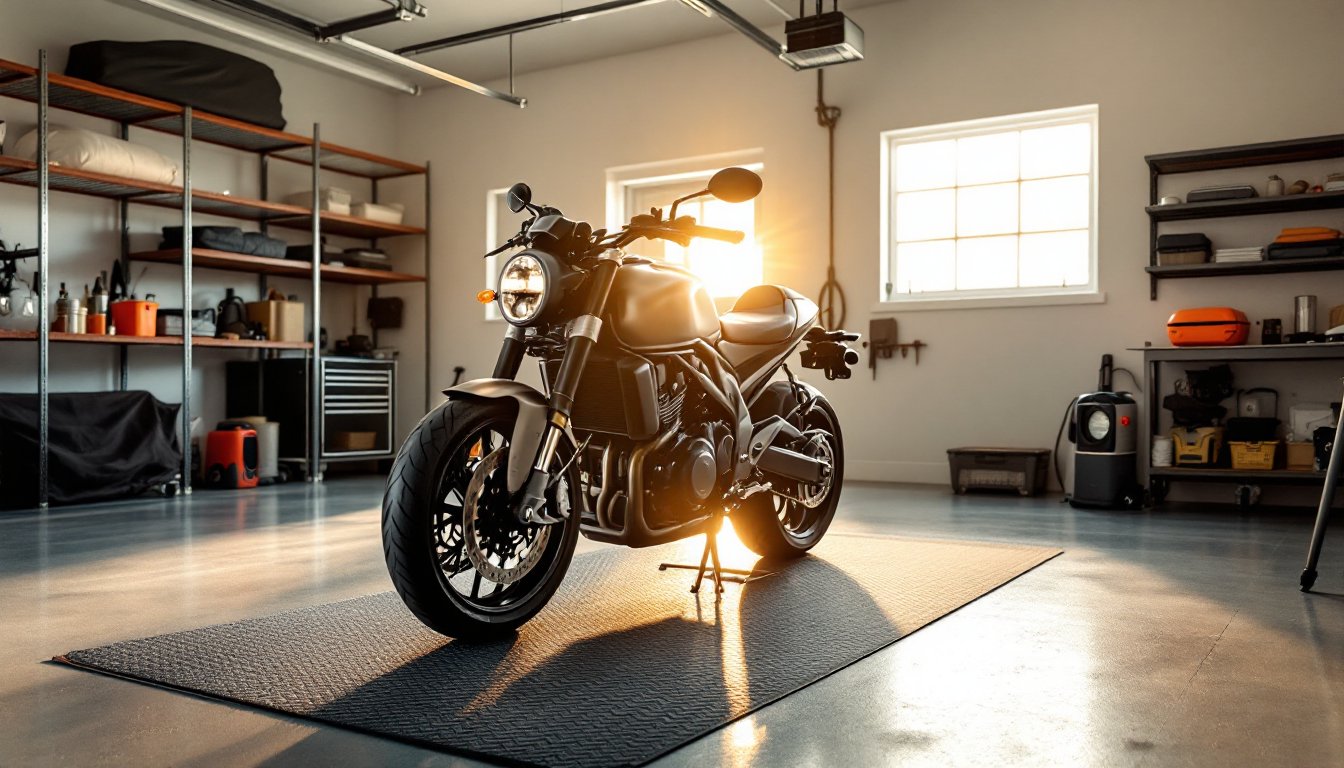
An indoor garage is the gold standard for motorcycle storage. It shields your bike from rain, sun, and extreme temperatures in one step. Most homeowners with garage space can dedicate a corner to the bike and move forward.
Before rolling your motorcycle in, clear the floor of sharp debris, oil drips, and salt residue (if you live in a cold climate, road salt tracked indoors corrodes the bike’s underbody). Sweep and, if possible, lay down a vinyl or rubber garage mat to keep the bike’s tires off bare concrete, which wicks moisture. This is especially important for long-term storage: a bike sitting on cold concrete for months can develop flat spots on the tires.
Position your bike away from windows and fluorescent shop lights, which still emit some UV. Keep it away from furnaces, water heaters, and HVAC ducts, the temperature swings and humidity changes near these appliances aren’t ideal. If you park multiple vehicles in the garage, don’t let the bike sit in a corner where exhaust or engine coolant might drip on it.
Wall-Mounted Racks and Lifts
If garage floor space is tight, wall-mounted racks and lifts save room and keep the bike off the ground entirely. A motorcycle stand or jack lift holds the bike upright or on its center stand, freeing floor space and getting the wheels off concrete to prevent flat spots. Options range from simple $30 single-sided stands to hydraulic motorcycle lifts that cost several hundred dollars.
For a DIY installation, locate studs in your garage wall (use a stud finder: studs are typically 16 inches on center). A wall-mounted rack needs to anchor to at least two studs with lag bolts or heavy-duty anchors, motorcycles weigh 400 to 800 pounds, so half measures fail. Drill pilot holes, use ½-inch or larger bolts, and install a securely fastened steel bracket rated for your bike’s weight. Double-check weight ratings: don’t guess.
Hydraulic lifts require a level floor and take up floor space, but they’re safer to use daily and prevent the uneven weight stress that single-sided stands can create over months of storage. If you ride frequently, a lift makes it quick to get your bike down and ready. For occasional storage, a sturdy single-sided stand works fine.
Outdoor Storage Solutions
Not everyone has a garage. If your bike lives outside, smart covers and canopies are non-negotiable.
Motorcycle Covers and Canopies
A quality motorcycle cover is the first line of defense against rain, sun, and dust. Look for multi-layer, breathable fabric covers (not solid plastic or rubber, which traps condensation underneath and causes paint damage and rust). Breathable covers let moisture escape while blocking water and UV.
Key features to check: reinforced grommets and tie-down straps to keep the cover secure in wind, soft inner lining so the cover doesn’t scratch the paint, and tapered fit so the cover doesn’t flap loose. A cover costs $30 to $150 depending on thickness and material: investing in a good one beats replacing corroded fasteners or repainting a sun-bleached tank.
For better protection, add a motorcycle canopy or carport over the bike’s parking spot. A basic metal carport or cloth canopy structure ($150 to $500+) shields the bike from direct rain and sun while allowing airflow. Look for canopies with reinforced corners and wind-rated fasteners: loose panels in a storm can collapse onto your bike. Anchor the canopy to the ground with concrete footings or heavy stakes so it doesn’t become a sail.
If you park outside year-round, the canopy plus cover combo is far more effective than either alone. The canopy blocks direct UV and heavy rain: the cover adds a secondary moisture barrier and protects against dust and debris. Position the canopy where water runoff drains away from the bike, not toward it.
For even better protection, some riders build or install DIY storage structures using woodworking plans, creating a more permanent shelter. Others use prefabricated storage sheds (with ventilation to prevent moisture buildup) specifically sized for a motorcycle.
Climate Control and Maintenance Storage
If you store your motorcycle for a season, winter in cold climates or summer in extreme heat, climate control takes storage to the next level. A dehumidifier in a closed garage or storage space pulls moisture from the air, slowing corrosion and rust. Aim for 40–60% relative humidity: anything above 70% encourages rust and mold.
Before long-term storage, do these prep steps: drain the fuel tank or add fuel stabilizer to prevent varnish buildup (follow the product instructions): top off the oil to prevent internal corrosion: inflate tires to 2 psi above normal to account for pressure loss over weeks: and disconnect the battery if storing longer than a month (remove the negative terminal first to prevent accidental short circuits). A trickle charger keeps the battery alive if the bike stays powered, but disconnection is simpler for seasonal storage.
Store your bike on the center stand if it has one, or on a paddock stand to keep weight off the tires. A motorcycle cover is still wise indoors to keep dust and spiders out of the air intake and engine bay. Leave a small gap under the cover to allow air circulation and prevent moisture from being trapped.
Many DIYers find that detailed step-by-step resources, like those found on specialized DIY platforms, offer helpful walkthroughs for winterization procedures. Also, sources like Popular Mechanics provide equipment reviews and guidance on choosing proper storage tools and climate control gear.
Conclusion
Motorcycle storage doesn’t have to be complicated. Start with what you have: if you’ve got a garage, use it and add a wall mount or mat to protect the bike. If you’re outside, get a breathable cover and a canopy to reduce UV and rain exposure. Long-term storage demands fuel stabilizer, battery disconnection, and ideally some dehumidification. Match your approach to your climate, your bike’s value, and how long it sits between rides. A few hundred dollars in storage setup now beats thousands in paint, rust, and engine repairs later.