

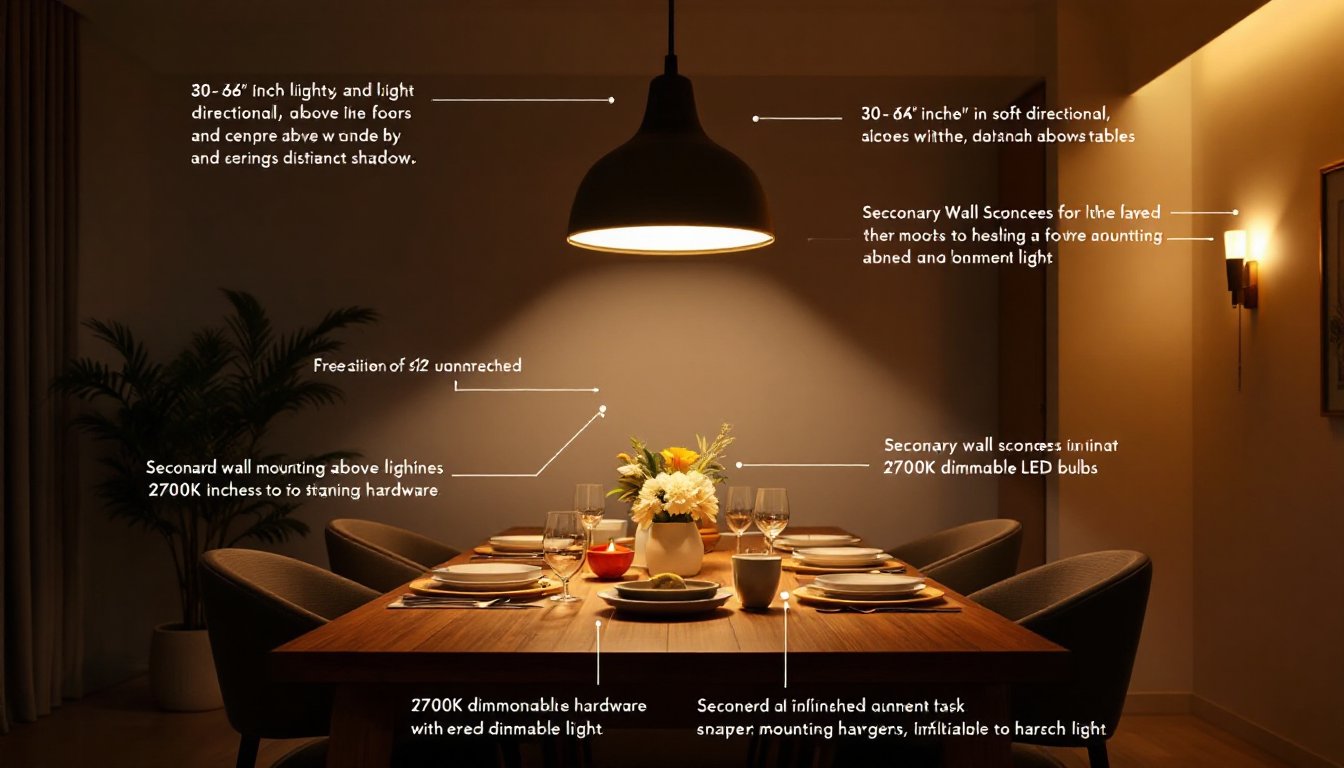

Dining room lighting is one of the most underestimated elements of home design, and one of the easiest to get wrong. Too dim, and your guests squint over dinner: too bright, and you’ve got a sterile feeling that kills conversation. The right dining room table lighting fixture doesn’t just illuminate the table: it sets the mood, highlights your décor, and anchors the entire room. Whether you’re working with a modest pedestal table or a sprawling formal setup, this guide walks you through the key decisions: what types of fixtures work best, how to size and place them, and what installation challenges you might face. Let’s cut through the guesswork and get you lighting that actually works.
Key Takeaways
- Proper dining room table lighting fixtures serve three critical functions: task lighting for visibility, ambient lighting for atmosphere, and accent lighting to highlight your décor and create an inviting gathering space.
- The ideal fixture height is 30–36 inches above the table surface, and width should be approximately 12 inches narrower than your table width to ensure comfortable sightlines and avoid glare.
- Chandeliers work best in formal rooms with 9+ foot ceilings, while pendant lights offer versatility for contemporary and farmhouse styles, taking up less visual bulk.
- Always use warm white LED bulbs (2700K color temperature) with a dimmer switch to adjust mood and achieve roughly 30 lumens per square foot at the table.
- Installation requires locating the ceiling joist or electrical box, confirming the fixture hangs directly above the table’s center, and recruiting a helper to ensure safe, code-compliant wiring and secure mounting.
Why Proper Dining Room Lighting Matters
Good dining room lighting serves three jobs at once: task lighting (so people can actually see their food), ambient lighting (to set a welcoming atmosphere), and accent lighting (to showcase your table and décor). Most dining spaces rely on a single overhead fixture, which is why many feel flat or institutional.
The right fixture height and intensity make a real difference. When light bounces harshly off a white plate or shines straight into someone’s eyes, the whole experience suffers. Conversely, soft, directional light makes food look better, makes the space feel intentional, and encourages lingering conversation. Layering multiple light sources, a pendant above the table plus wall sconces or a dimmer-controlled fixture, gives you control over the mood for casual weeknight dinners versus holiday gatherings.
Dimensions matter too. A fixture that’s too small above a large table leaves the corners in shadow. One that’s too large or hangs too low blocks sightlines and creates awkward traffic patterns. Getting the scale right transforms the space from “just a place to eat” into an inviting gathering spot.
Types of Dining Room Lighting Fixtures
Chandeliers and Pendant Lights
Chandeliers and pendant lights are the workhorses of dining room tables. A chandelier typically has multiple arms with bulbs spread across a vertical plane, creating broad, diffused light. Pendant lights hang from a single cord or chain and focus light more directly downward. Both work well above dining tables, but they excel in different scenarios.
Chandeliers suit formal or traditional dining rooms and spaces with higher ceilings (9 feet or more). The spread of light from multiple arms covers the table evenly and adds visual interest. But, they require more headroom and can feel heavy in a modest space. Pendant lights are more versatile, they work in contemporary, farmhouse, or eclectic settings and take up less visual bulk. A single large pendant or three smaller ones hung in a line are both popular. Fixture width should be 12 inches narrower than your table width, and the bottom should hang 30–36 inches above the table surface for comfortable sightlines and to avoid glare.
Wall Sconces and Track Lighting
Wall sconces on either side of the dining room add layered light without taking up overhead space. They work especially well in smaller rooms or as supplementary fixtures. Sconces are often paired with a dimmer, letting homeowners adjust brightness for different meals and occasions.
Track lighting offers flexibility if your dining space serves multiple purposes or if you want to highlight artwork or shelving alongside the table. But, it requires more planning during install and can look industrial if not carefully chosen. Track systems work best in open-plan living/dining areas where the light can serve the whole zone.
How to Choose the Right Fixture for Your Space
Start with table dimensions. Measure the length and width of your table, then note the distance from the table to the ceiling. If you have a rectangular 36″ × 60″ table, a pendant fixture or chandelier should be roughly 24–30″ wide. The rule of thumb: subtract 12 inches from the table width, then size your fixture accordingly.
Consider ceiling height. Standard 8-foot ceilings are tight: the fixture should hang lower (32–34 inches above the table) to avoid hitting heads. At 9–10 feet, you can hang lower for more drama. At 12 feet or higher, you’ve got room for a statement chandelier. Check local building codes: some jurisdictions have minimum clearance requirements for walkways near light fixtures.
Brightness and bulb type matter. Modern LED bulbs are efficient and dimmable, crucial for dining spaces where you want to adjust mood. A dimmer switch is one of the best upgrades you can make for about $20–$40 in parts. Aim for 2700K color temperature (warm white) to make food look appetizing and people look healthy. Measure your dining room square footage, then look at the fixture’s lumen output. As a baseline, dining rooms need roughly 30 lumens per square foot at the table, but you can achieve more with a dimmer and layered lighting.
Design should complement your dining room and kitchen style. Interior design resources like MyDomaine and House Beautiful showcase how pendant and chandelier styles pair with cabinetry, wall colors, and adjacent spaces. If your kitchen is modern, a sleek metal pendant works: traditional rooms suit classic brass or candle-style fixtures. Don’t ignore the ceiling itself, dark ceilings require brighter fixtures: light ceilings are more forgiving.
Installation and Placement Tips
Before you hang anything, locate the ceiling joist or electrical box. Most dining room fixtures hang from an existing centered ceiling outlet or a new outlet that a licensed electrician installs. If you’re replacing an old fixture, the existing box is your anchor: if you’re adding new light, an electrician ensures the box is mounted to a joist or brace, non-negotiable for safety and code compliance.
Measure from the edges of your table to find the dead center of the room (or the table, if it’s not centered). Mark a plumb line with a laser level to confirm the fixture will hang directly above. A fixture even 6 inches off-center looks wrong in a small room.
Height is critical. Hang the fixture so the bottom sits 30–36 inches above the table surface when fully installed. Use a temporary hook to test height before final install. You’ll be surprised how different 4 inches feels. If you’re installing a chandelier or pendant for the first time, recruit a helper, one person steadies the fixture while the other wires and secures it.
Wiring and installation depend on your fixture type. Pendant lights typically have a nipple (small threaded rod) that screws into the outlet box and accepts a canopy to hide the box. Chandeliers use a central bolt and sometimes a medallion around the base. Both require a wire connector rated for the voltage (usually 120V in North America) and gauge of wire in your circuit. If the existing wiring is cloth-wrapped or appears corroded, that’s a job for a licensed electrician, don’t patch outdated wiring with modern fixtures.
Once hung, test the fixture before securing it fully. Flip the switch, verify there’s no buzzing or flickering, and confirm the shade or diffuser sits properly. Most fixtures include a mounting plate: align it perfectly before tightening all fasteners. A loose fixture is a safety hazard and an annoyance you’ll regret when guests are over. If your fixture is particularly heavy (over 50 pounds), use a swag hook rated for that weight or reinforce the ceiling box with a fan-rated brace.
Conclusion
Choosing and installing the right dining room table lighting fixture is an investment that pays back every time you use the space. Measure carefully, layer your lighting with a dimmer, and don’t cut corners on installation. Whether you go with a classic chandelier, a trendy pendant, or a combination of sconces and track, your dining room will feel intentional and inviting. Explore design galleries at Homify for inspiration, then get the fixture hung safely and enjoy meals that look and feel the way you intended.