

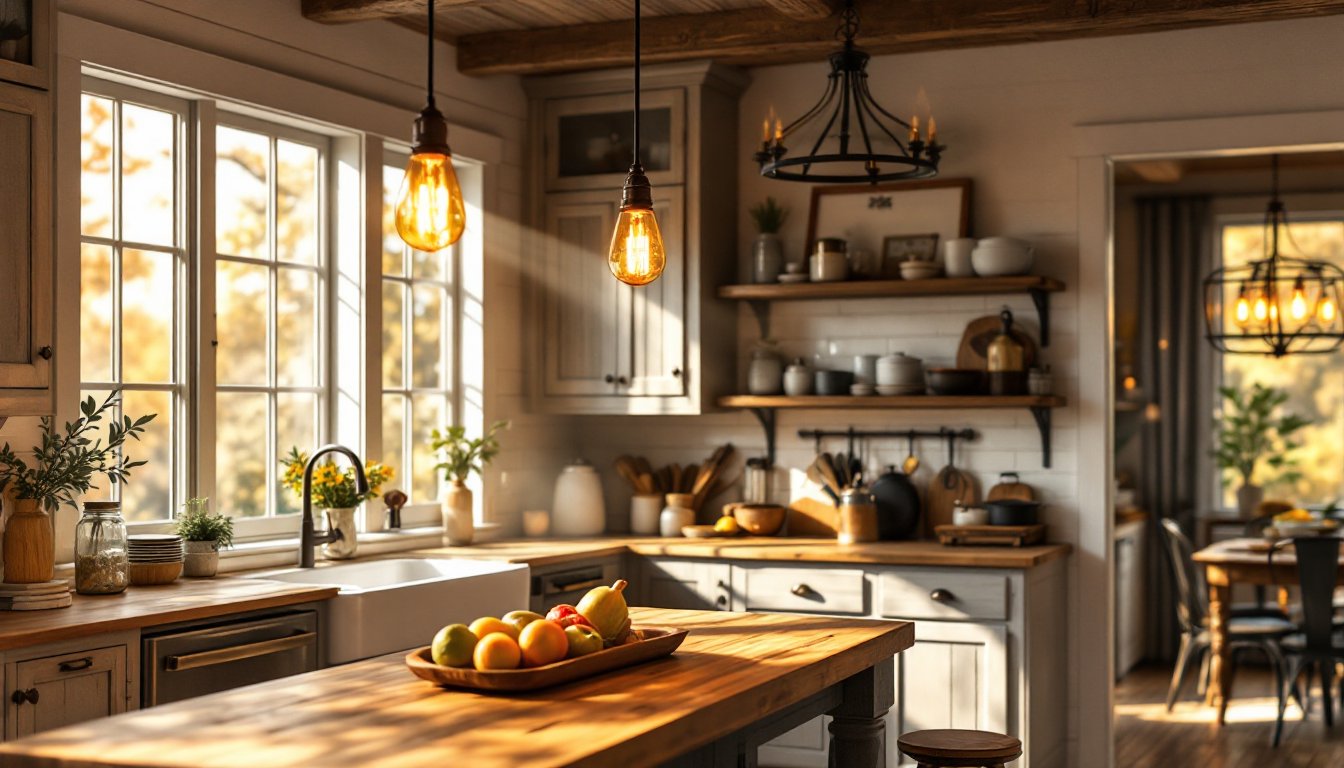

Country kitchen lighting sets the tone for a warm, inviting space where family gathers and meals come to life. Whether you’re drawn to rustic barn fixtures, vintage industrial pendants, or softly glowing chandeliers, the right lighting anchors a farmhouse aesthetic while keeping the room functional. Unlike trendy design choices that fade quickly, country kitchen lighting has enduring appeal, it works because it blends form with purpose. This guide walks through design fundamentals, fixture types, and layering strategies to help you create a kitchen that feels both lived-in and thoughtfully lit.
Key Takeaways
- Country kitchen lighting prioritizes warm color temperatures (2700K–3000K) and authentic materials like wrought iron, aged brass, and frosted glass to create an inviting, timeless farmhouse aesthetic.
- Pendant lights and chandeliers are essential for country kitchens—hang pendants 30–36 inches above countertops and limit chandelier use to kitchens with 8-foot-plus ceilings to maintain proper scale and function.
- Layered lighting with ambient, task, and accent components prevents dark corners and eye strain; use dimmable ceiling fixtures paired with under-cabinet or pendant task lighting for versatility.
- Vintage and repurposed country kitchen lighting fixtures add authentic character but require professional rewiring ($100–$300 per fixture) to meet modern electrical code.
- Island pendants should be spaced 12–18 inches apart on 4–6-foot islands and hung at consistent height to define the work zone while maintaining sightlines across the kitchen.
- LED bulbs rated at 2700K–3000K with a CRI of 90+ provide natural color rendering while consuming 60–80% less energy than incandescent alternatives, with lifespans exceeding 25,000 hours.
Understanding Country Kitchen Lighting Style
Country kitchen lighting draws from rural farmhouse traditions and blends warmth with authenticity. Rather than matching a single era, it embraces materials and finishes that feel grounded: wrought iron, aged brass, copper, wood, and frosted or seeded glass. The goal is layered illumination that supports cooking while inviting lingering.
A true country kitchen lighting scheme typically avoids stark, overly modern fixtures or anything overly polished. Recessed lights are buried or downplayed: exposed bulbs, visible hardware, and handcrafted touches take center stage. The palette tends toward warm color temperatures, 2700K to 3000K is standard, creating that golden, welcoming glow rather than clinical brightness.
Key Characteristics of Farmhouse and Rustic Fixtures
Farmhouse fixtures share distinct visual markers. Oil-rubbed bronze and weathered finishes mimic aging and authentic wear, while seeded or frosted glass shades soften direct glare. Exposed sockets (Edison-style), visible cords or chains, and simple metal bands reinforce a handmade quality. Antique brass develops a patina over time, creating depth many homeowners prefer to shiny new brass.
Rustic variants lean into raw materials: unfinished wood, cast iron, galvanized steel, and rope accents. A fixture might combine a wooden base with a metal cage or industrial trim, balancing refined and rough. Details matter, a twisted wire holder, a bent-metal bracket, or an intentional seam all signal authenticity. Avoid overly decorative swags or ornate crystal: country lighting stays understated while remaining visually interesting.
Best Fixture Types for Country Kitchens
Not all fixtures suit a country kitchen. Sleek contemporary designs, overly geometric shapes, and chrome finishes typically clash. Instead, focus on types with proven farmhouse roots.
Pendant lights are workhorses in country kitchens, they direct light downward without bulk overhead. Island and counter pendant pairs or trios are standard: hanging them 30 to 36 inches above the surface keeps sightlines clear while preventing glare. Chandeliers add drama and focal-point appeal, especially in larger kitchens or dining areas adjacent to the cooking zone.
Sconces flanking a window or open shelving provide ambient and accent lighting in softer arrangements. Wall-mounted fixtures with exposed sockets or glass shades feel authentic without demanding much real estate. Flush-mount or semi-flush ceiling fixtures work for lower ceilings where pendants won’t hang safely: choose styles with apron-style shades or simple metalwork to maintain the aesthetic.
Pendant Lights and Chandeliers
Pendant lights are the linchpin of country kitchen design. A single large pendant over a sink or corner creates visual interest: multiple smaller pendants spaced 24 to 30 inches apart above an island define the zone without looking crowded. Glass dome, schoolhouse, or bell-shaped shades are quintessential, they distribute light efficiently and echo vintage industrial origins.
When choosing pendants, check the socket type: medium base (E26) is standard and holds most bulbs. Hang them on adjustable cord or chain to fine-tune height once installed, 15 to 18 inches from the shade bottom to the countertop is typical, but tweak based on task needs and proportions.
Chandeliers in country kitchens work best in 8-foot-plus ceilings and when scaled to the space. A 24-inch-diameter fixture suits a 12×14-foot kitchen: anything larger risks overwhelming the room. Wrought iron, candle-style arms, and cream or amber-tinted glass shades keep the farmhouse vibe authentic. A chandelier over a breakfast nook or kitchen table adds warmth that no island pendant can match.
Vintage and Repurposed Lighting Options
Authentic vintage fixtures carry genuine history. Salvage yards, antique malls, and online marketplaces (including estate sales) yield original tin shades, milk-glass fixtures, and brass elements from the early-to-mid 20th century. These pieces often require an electrician’s hands to rewire safely with modern code-compliant sockets and wiring.
Repurposed fixtures blur the line between salvage and new-build. A mason jar hung from reclaimed wood, a galvanized steel cage fitted with a new socket, or an old schoolhouse shade mounted on fresh hardware all deliver authentic character without the uncertainty of true antiques. Many makers craft these hybrid pieces specifically for farmhouse aesthetics, they’re designed to work with current electrical code and include proper UL-listed components.
Before buying a vintage fixture, inspect for loose connections, cracked glass, or brittle wiring. The fixture’s bones might be sound, but the electrical guts often need replacement, a safe rewire by a licensed electrician costs $100–$300 per fixture, factoring that into your budget.
Creating Proper Lighting Layers in Your Country Kitchen
A country kitchen’s success hinges on layered lighting: ambient (overall room brightness), task (counters and sink), and accent (focal points and mood). Relying on one fixture leaves dark corners and eye strain.
Ambient lighting comes from ceiling fixtures, a chandelier, flush-mount, or semi-flush, that illuminate the general space. It should be dimmable: a three-way switch or dimmer (compatible with your bulb type) is essential for shifting from bright task work to soft evening atmosphere. In kitchens under 200 square feet, a single ceiling fixture plus pendants often suffices: larger kitchens need two ceiling sources or more distributed pendants.
Task lighting focuses on work zones: countertops, the sink, the stove. Pendant lights above an island or sink deliver direct illumination. For perimeter counters, under-cabinet lighting, whether LED strip, puck lights, or linear fixtures, keeps hands and cutting boards well-lit without bouncing glare upward. Mount under-cabinet lights toward the front edge of the cabinet bottom, not flush against the back wall: this prevents shadows directly in front of you.
Accent lighting highlights architectural details, open shelving, or a focal wall. Recessed lights aimed at shelves, floating sconces, or mini-pendants in a soffit all work. These layers don’t need to be bright: they create depth and visual interest, especially important in kitchens where task and ambient lights would otherwise feel sterile.
When layering, use warm white bulbs (2700K–3000K, not 4000K or 5000K) consistently. Mixing color temperatures makes the space feel disjointed. A medium color rendering index (CRI) of 90+ ensures food, skin tones, and finishes look natural. LED bulbs now deliver these specs affordably, expect 60–80% lower energy use than incandescent and 25,000+ hour lifespans, meaning fewer replacements.
Island and Task Lighting Solutions
Kitchen islands often become the lighting focal point, and for good reason, they’re naturally prominent. Pendant clusters above an island define the space visually and functionally. A 4-foot island suits two pendants spaced evenly: a 6-foot island handles three. Space them 12 to 18 inches apart and keep them aligned with the island edge or centered along its length.
When selecting island pendants, match or complement the finish of your cabinet hardware, faucet, and other metallics. Mixing finishes, one oil-rubbed bronze fixture and one brushed brass, reads as unintentional unless carefully curated. Stick to one primary finish for cohesion: a secondary accent (like a wooden detail) is fine.
Hang pendants 30–36 inches above the countertop to allow sightlines across the kitchen. Adjust slightly if the island blocks views to doorways or the rest of the room. Too low and they feel cluttered: too high and you lose the intimate, task-focused quality.
Task lighting extends beyond islands. The sink area benefits from a dedicated pendant or recessed light directly above: avoid placing it off to the side where your own shadow blocks the work. Stove zones are trickier, overhead fixtures can create heat stress and reflected glare off cookware. Instead, rely on the range hood’s built-in lights (if it has them) plus nearby ambient and pendant illumination.
Countertop task lights should deliver enough lumens without glare. A 40–60-watt equivalent LED per fixture is typical for a 3×4-foot counter section. If relying on under-cabinet strip lighting, choose dimmable LED strips rated for kitchen use (splash-resistant at minimum) and install a low-voltage transformer with a dedicated circuit if running multiple strips. This keeps electrical load manageable and prevents flickering.